

RC ESC Motor Direction Explained
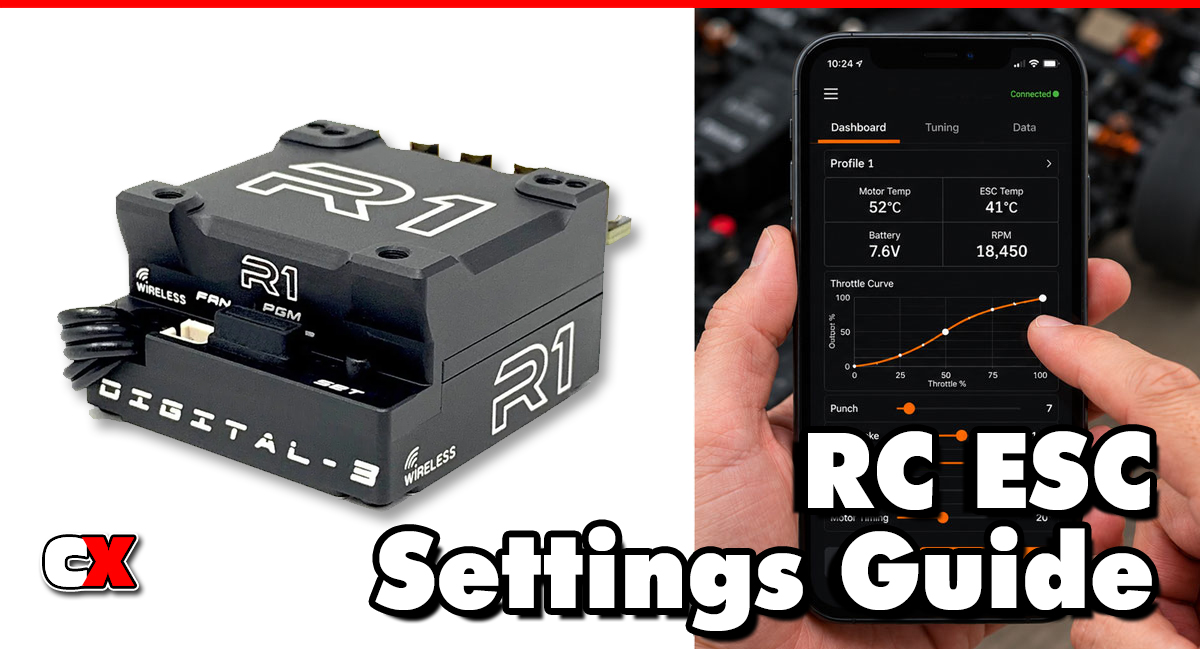
What Is Motor Direction?
Motor Direction is an ESC setting that determines which way the motor rotates when throttle is applied.
When you pull the trigger on your transmitter, the ESC sends power to the motor. Depending on the Motor Direction setting, the motor will spin either:
• Forward (normal rotation)
• Reverse (opposite rotation)
The purpose of this setting is to ensure that forward throttle on the transmitter makes the vehicle move forward.
Many modern ESCs allow Motor Direction to be changed electronically through:
• ESC programming menus
• Programming cards
• Smartphone apps
• Computer software
This eliminates the need to swap motor wires manually in many cases.
How Does Motor Direction Affect Your Car?
Motor Direction directly affects how the vehicle responds to throttle inputs.
If the setting is incorrect, pulling the trigger to accelerate may cause the car to drive backward instead of forward.
Correct Motor Direction
When Motor Direction is configured correctly:
• Forward throttle moves the vehicle forward.
• Braking works properly.
• Reverse functions correctly.
• Vehicle control feels natural.
Incorrect Motor Direction
If Motor Direction is configured incorrectly:
• Forward throttle moves the car backward.
• Reverse moves the car forward.
• Driving becomes confusing.
• Racing becomes nearly impossible.
• Crawling precision suffers.
Incorrect Motor Direction can also create issues with certain ESC modes and safety features that assume the vehicle is traveling forward.
How Do You Change Motor Direction?
The exact process depends on the ESC manufacturer. Common methods include:
Using ESC Programming Menus
Many ESCs include a Motor Direction parameter in the programming menu.
Navigate to:
• Motor Direction – Normal or Reverse
Save the setting and restart the ESC.
Using a Programming Card
Many Hobbywing, SkyRC and other ESCs support programming cards.
Simply:
1. Connect the programming card.
2. Locate Motor Direction.
3. Select Normal or Reverse.
4. Save the setting.
Using a Smartphone App
Bluetooth-enabled ESCs often allow Motor Direction changes through an app.
Examples include:
• Hobbywing OTA Programmer
• Spektrum Smart ESC App
• R1 Wurks programming systems
The change usually takes only a few seconds.
Swapping Motor Wires
If your ESC does not offer a Motor Direction setting, you can often reverse motor rotation by swapping any two motor wires on a brushless system.
For example:
• Swap A and B
• Leave C unchanged
This reverses motor rotation.
For brushed motors, reversing the positive and negative motor leads will reverse rotation – just be careful of your timing settings.
When To Change Motor Direction
Motor Direction should only be changed when necessary. Common situations include:
Installing a New ESC
Some ESCs default to a different rotation direction than your previous system. Always verify vehicle movement after installation.
Installing a New Motor
Motor timing, sensor wiring or manufacturer differences can sometimes result in reversed rotation. Check operation before driving.
Converting Chassis Layouts
Changing from:
• Rear motor to mid motor
• Standard transmission to reversed transmission
• Conventional axle to portal axle
…may require a Motor Direction adjustment.
After Drivetrain Modifications
Transmission upgrades or custom drivetrain projects may alter rotational requirements. Motor Direction allows correction without major rewiring.
Correcting Build Error
Occasionally a vehicle is assembled correctly but the ESC is accidentally programmed in Reverse mode. Changing Motor Direction immediately fixes the issue.
What to Check After Adjusting Motor Direction
Always inspect the vehicle carefully after changing Motor Direction.
Verify Forward Movement
The first check is simple:
• Pull throttle.
• Vehicle should move forward.
Never assume the setting worked correctly.
Verify Reverse Operation
Confirm:
• Forward works properly.
• Reverse still functions normally.
• Brake operation remains predictable.
Check Sensor Systems
On sensored brushless systems:
• Ensure sensor cables remain connected.
• Verify smooth startup.
• Check for cogging or hesitation.
Some systems require a matching Motor Direction setting between ESC and motor software.
Check Telemetry Data
If your ESC supports telemetry:
• Verify RPM readings.
• Confirm speed readings are accurate.
• Check motor rotation indicators if available.
Test Drive Carefully
Perform a short test drive before racing or crawling.
Pay attention to:
• Throttle response
• Brake response
• Reverse operation
• Overall drivability
Basic Motor Direction vs Advanced Settings
Motor Direction is typically considered a basic ESC setting, but advanced users may encounter additional considerations.
| Basic Motor Direction | Advanced Motor Direction |
|---|---|
| Normal or Reverse selection | ESC-specific rotation profiles |
| Simple forward/reverse correction | Integration with Telemetry systems |
| Used during initial setup | Used with custom drivetrain layouts |
| Common on RTR vehicles | Common on competition and custom builds |
| Minimal tuning knowledge required | Requires understanding of drivetrain design |
For most RC enthusiasts, Motor Direction is simply a setup parameter used to ensure the vehicle moves forward correctly.
Advanced racers and builders may use it when experimenting with specialized drivetrain configurations.
Common Motor Direction Mistakes
Reversing the Transmitter Instead
Many beginners reverse the throttle channel on the transmitter when the real issue is incorrect Motor Direction.
This can create problems with:
• Braking
• Reverse operation
• ESC calibration
Always check Motor Direction first.
Forgetting to Recalibrate the ESC
Some ESCs require throttle recalibration after major configuration changes. Consult your ESC manual if throttle response seems abnormal.
Ignoring Sensor Settings
Certain sensored ESCs and motors must have matching direction settings to maintain smooth operation.
Testing at Full Power
Always test Motor Direction with the vehicle on a stand or with the wheels off the ground first.
This prevents accidental crashes.
FAQ
Q: Does Motor Direction increase speed?
A: No, and yes. Motor Direction only changes the rotation direction of the motor. It does not increase speed or power. On a brushed motor, a reversed-rotation motor (with timing) will be much slower than that same motor in forward-rotation with the same timing.
Q: Can Motor Direction improve acceleration?
A: No. Acceleration remains unchanged. The setting only determines which way the motor rotates.
Q: Should I use transmitter reversing instead of Motor Direction?
A: Generally no. Correct Motor Direction through the ESC whenever possible to ensure proper brake and reverse operation.
Q: Can I change Motor Direction on a sensored motor?
A: Yes. Most modern sensored ESCs allow Motor Direction changes through programming software or settings.
Q: Will changing Motor Direction damage my motor?
A: No. Reversing motor rotation is a normal function supported by both brushed and brushless motors.
Q: Why does my car drive backward when I pull the trigger?
A: The Motor Direction setting is likely reversed, or the motor wiring is configured incorrectly.
Q: Do all ESCs support Motor Direction adjustment?
A: No. Many modern ESCs do, but some older or entry-level models require manual motor wire changes.
Q: Should racers ever change Motor Direction?
A: Only when drivetrain configuration or vehicle layout requires a different motor rotation direction.
Back to the RC ESC Settings Guide.

