
RC ESC Initial Brake Force Explained
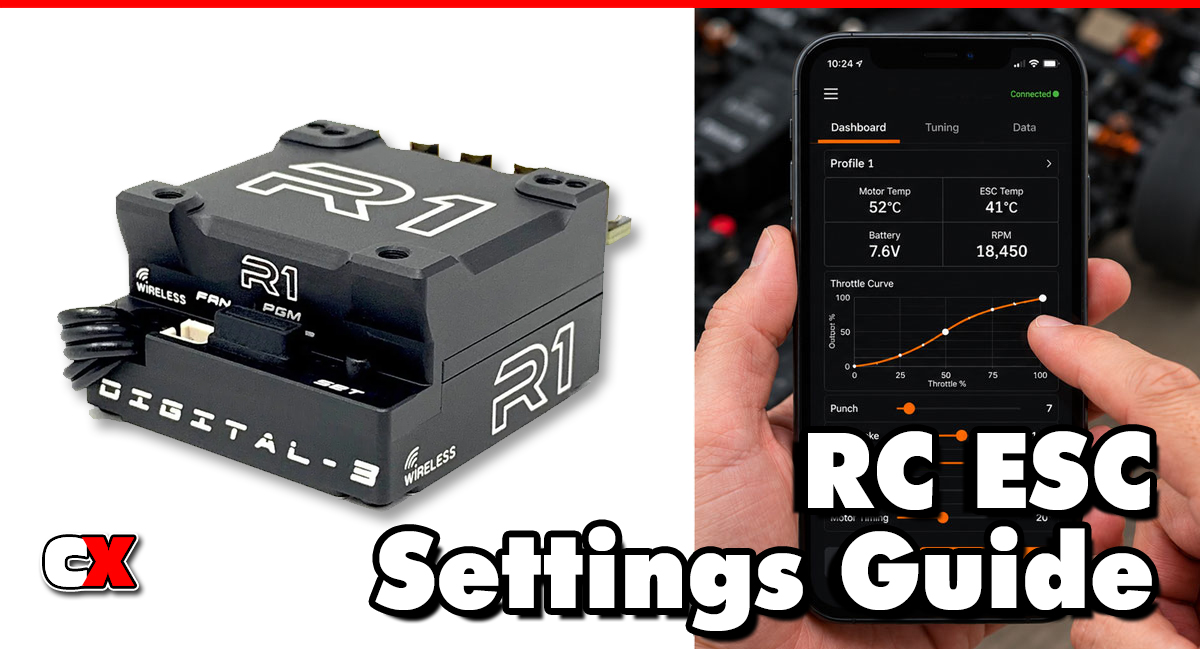
What Is Initial Brake Force?
Initial Brake Force is an Electronic Speed Control (ESC) setting that determines the amount of braking power applied immediately when the throttle trigger first enters the brake range.
Think of Initial Brake Force as the starting point of your brake curve. Instead of beginning at zero braking and gradually increasing as you pull the trigger, the ESC instantly applies a predetermined amount of brake force.
For example:
• 0% Initial Brake Force means braking begins gradually as you pull the trigger.
• 10% Initial Brake Force means the ESC immediately applies 10% braking power when braking begins.
• 20% Initial Brake Force means the ESC immediately applies 20% braking power as soon as the trigger enters the brake zone.
Many modern racing ESCs allow Initial Brake Force to be adjusted independently from Maximum Brake Force.
Common Initial Brake Force Ranges
| Setting | Effect |
|---|---|
| 0% | Smoothest brake engagement |
| 5-10% | Mid initial braking |
| 10-20% | Stronger corner entry response |
| 20%+ | Very aggressive brake feel |
The available range depends on the ESC manufacturer and firmware version.
How Does Initial Brake Force Affect Your Car?
Initial Brake Force primarily affects how the car reacts when braking first begins.
Increasing Initial Brake Force
Higher Initial Brake Force settings:
• Increase braking response
• Make the car slow down sooner
• Improve braking consistency for some drivers
• Create a more aggressive corner entry
• Reduce trigger movement required to generate braking force
However, too much Initial Brake Force can.
• Cause rear-wheel lockup
• Increase spinning under braking
• Make the car difficult to drive on low-grip tracks
• Create an abrupt braking feel
Decreasing Initial Brake Force
Lower Initial Brake Force settings:
• Create smoother brake engagement
• Improve stability entering corners
• Reduce rear-end instability
• Make braking easier to modulate
• Improve drivability on slippery surfaces
However, too little Initial Brake Force can:
• Make braking feel soft
• Require more trigger movement
• Reduce responsiveness entering corners
• Cause inconsistent braking points for aggressive drivers
How Do You Change Initial Brake Force?
The exact process depends on your ESC model.
Most modern racing ESCs allow Initial Brake Force adjustments through:
• ESC programming box
• Bluetooth programming module
• Smartphone app
• Computer software
• ESC setup menu
Basic Adjustment Process
1. Connect to the ESC programming interface.
2. Locate the Initial Brake Force setting.
3. Note the current value.
4. Increase or decrease in small increments.
5. Save the settings.
6. Test drive the vehicle.
7. Monitor handling changes.
Recommended Adjustment Scale
Small changes often produce noticeable results.
A good starting point is:
• 2-5% adjustments for racing applications
• One setting increment at a time when available
Avoid making large changes together with Maximum Brake Force, Drag Brake or Brake Frequency, as it becomes difficult to identify which adjustment created the handling change.
When To Change Initial Brake Force
Increase Initial Brake Force When
• Braking feels delayed
• The car requires excessive trigger movement before slowing down
• Corner entry feels lazy
• You want stronger brake response
• The track has high traction
• You prefer an aggressive driving style
Decrease Initial Brake Force When
• The rear end becomes unstable during braking
• The car spins entering corners
• Braking feels abrupt
• Tires lose traction under braking
• The track has low grip
• You prefer smooth inputs
Track Surface Considerations
High-Grip Carpet
Higher Initial Brake Force is often easier to control because traction levels are high.
High-Bite Asphalt
Moderate to high Initial Brake Force can improve responsiveness.
Loose Dirt
A lower Initial Brake Force typically improves stability.
Wet or Slippery Conditions
A lower Initial Brake Force usually provides better control and prevents tire lockup.
What To Check After Adjusting Initial Brake Force
After making changes, evaluate the car in several areas.
Corner Entry Stability
Watch for:
• Rear-end rotation
• Tire lockup
• Sudden direction changes
• Consistent braking behavior
Braking Distance
Check whether:
• The car stops too quickly
• The car overshoots corners
• Braking points remain predictable
Trigger Feel
Evaluate whether braking feels:
• Smooth
• Progressive
• Responsive
• Easy to repeat lap after lap
Tire Condition
Excessively aggressive braking can:
• Increase tire wear
• Possible flat spots on your tires
• Reduce consistency during long runs
ESC and Motor Temperatures
Although Initial Brake Force generally has minimal impact on temperatures, it is still good practice to verify:
• ESC temperatures
• Motor temperatures
• Battery temperatures
…after major setup changes.
Basic Initial Brake Force vs Advanced Settings
Many drivers confuse Initial Brake Force with other braking adjustments. While they work together, each serves a different purpose.
| Setting | Purpose |
|---|---|
| Initial Brake Force | Determines braking power applied when braking first begins |
| Maximum Brake Force | Controls total braking power available |
| Drag Brake | Applies braking when throttle returns to neutral |
| Brake Frequency | Changes how smoothly braking power is delivered |
| Brake Rate | Controls how quickly brake force increases |
| Brake Curve | Alters braking response throughout trigger travel |
Basic Setup
For most drivers:
• Initial Brake Force: 0-10%
• Maximum Brake Force: Moderate setting
• Drag Brake: Low or off
• Brake Frequency: Default
This combination provides smooth and predictable braking.
Advanced Setup
Experienced racers often fine-tune:
• Initial Brake Force
• Maximum Brake Force
• Brake Frequency
• Brake Curve
• Drag Brake
…to create a braking feel that matches track conditions and driving style.
The goal is not maximum braking power. The goal is maximum control under braking.
FAQ
Q: Is Initial Brake Force the same as Maximum Brake Force?
A: No. Initial Brake Force controls how much braking is applied when braking first begins. Maximum Brake Force controls the highest braking force available at full brake trigger input.
Q: Does Initial Brake Force affect top speed?
A: No. Initial Brake Force only affects braking behavior.
Q: Can too much Initial Brake Force make the car spin?
A: Yes. Excessive Initial Brake Force can cause the rear tires to lose traction and make the car unstable entering corners.
Q: What is a good Initial Brake Force starting point?
A: Most drivers should start between 0% and 10% and adjust from there.
Q: Should I change Initial Brake Force or Maximum Brake Force first?
A: Adjust Maximum Brake Force first to establish overall braking power. Then fine-tune Initial Brake Force to achieve the desired brake feel.
Q: Does Initial Brake Force affect Drag Brake?
A: No. They are separate settings. Initial Brake Force affects active braking when you push the trigger into the brake range, while Drag Brake operates when the trigger returns to neutral.
Q: Is more Initial Brake Force always better?
A: No. The ideal setting depends on traction, driving style, vehicle type and track conditions.
Back to the RC ESC Settings Guide.

