

What Does C Rating Mean on a LiPo Battery?
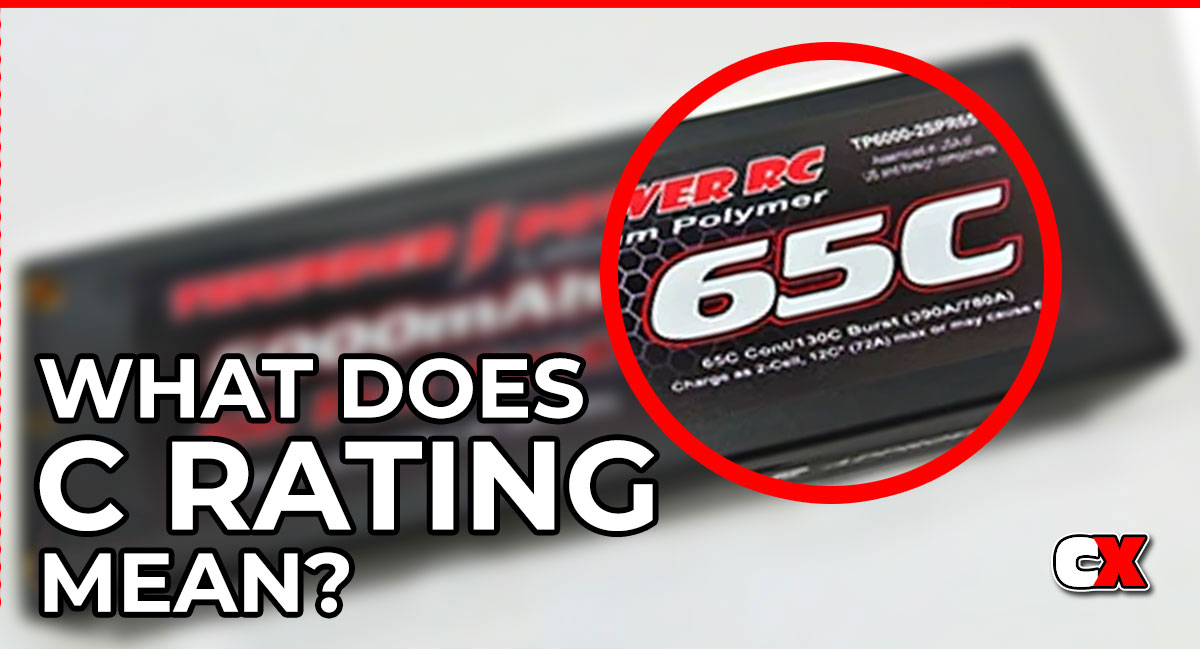
If you’ve ever looked at a LiPo battery, you’ve probably seen something like “5000mAh 50C” printed on the label. Most people understand the mAh part (capacity), but the C rating is where things get confusing.
And yet, the C rating is one of the most important numbers on your battery.
It directly affects how your RC car accelerates, how consistent it feels on throttle and even how safe your setup is.
In this guide, we’ll break it down in simple terms – no engineering degree required.
What Is the C Rating on a LiPo Battery?
The C rating tells you how fast a battery can safely deliver its energy.
In RC terms, it answers one simple question:
How much power can this battery supply to your motor without damage?
Think of it like a flow rate:
• Capacity (mAh) = how much energy the battery holds
• C rating = how quickly that energy can be delivered
A higher C rating means:
• More current (amps) available
• Better acceleration
• Less voltage drop under load
What Does the “C” Actually Stand For?
The “C” stands for capacity-based discharge rate (often called “C-rate”). It’s a multiplier based on the battery’s capacity.
Instead of listing current directly, manufacturers use C rating so the same concept works across all battery sizes.
How to Calculate C Rating (The Simple Way)
Here’s the formula you need:
Max Continuous Amps = Capacity (Ah) × C Rating
Let’s break that down with a real example:
• Battery: 5000mAh (which is 5.0Ah)
• C Rating: 50C
5.0 × 50 = 250 amps
That battery can safely deliver 250 amps continuously
This is the number your ESC and motor care about.
Why C Rating Matters for RC Cars
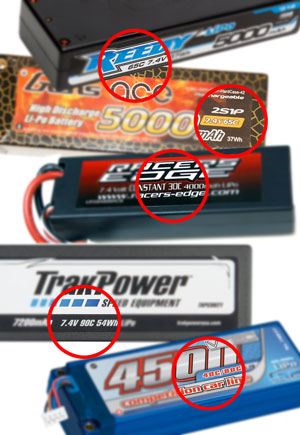 The C rating isn’t just a spec, it directly affects how your car drives.
1. Acceleration and Punch
Higher C rating = more current available instantly That means:
• Faster launches
• Stronger throttle response
2. Voltage Stability
Low C batteries can “sag” under load.
High C batteries hold voltage better, which means:
• More consistent speed
• Better lap times
3. Heat and Efficiency
If a battery is pushed beyond its limits:
• It overheats
• Performance drops
• Lifespan decreases
Using the correct C rating keeps things running cooler and safer.
What Happens If the C Rating Is Too Low?
This is where many beginners run into trouble.
If your C rating is too low for your setup:
• The battery struggles to supply enough current
• Voltage drops under throttle
• The car feels slow or inconsistent
• The battery can overheat or puff
In extreme cases, it can permanently damage the battery.
What Happens If the C Rating Is Too High?
Here’s the good news:
You can’t really have “too much” C rating in terms of safety.
But there are trade-offs:
• Higher C batteries usually cost more
• Sometimes slightly heavier
• Not always necessary for mild setups
So while higher is generally better, it’s about matching your setup, not just maxing numbers.
Understanding Continuous vs Burst C Rating
Most LiPo batteries list two numbers:
• Continuous C rating (real-world safe output)
• Burst C rating (short spikes only)
Example:
• 50C continuous
• 100C burst
Focus on continuous C rating for setup decisions. Burst ratings are often marketing-driven and less reliable.
Real-World Example for RC Cars
Let’s say you’re running a 1/10 scale buggy with a brushless system that’s pulling 100amps.
You’d want a battery that can comfortably exceed that. Good match:
• 5000mAh 30C = 150 amps → OK
• 5000mAh 50C = 250 amps → Better
Why? Because having extra headroom:
• Reduces heat
• Improves consistency
• Extends battery life
Does Higher C Rating Make Your RC Car Faster?
Not directly, but it helps unlock performance.
A higher C rating:
• Won’t increase top speed by itself
• But allows your system to reach its full potential
You’ll notice:
• Better punch
• Stronger mid-range power
• More consistent performance over a run
Are C Ratings Always Accurate?
Here’s the honest answer:
Ummm, no.
Some manufacturers inflate C ratings for marketing. That’s why:
• Real-world testing matters
• Trusted brands tend to be more accurate
• Two “50C” batteries can perform very differently
Many experienced RC drivers focus on:
• Internal resistance
• Brand reputation
• Real-world performance
How to Choose the Right C Rating
Here’s a simple guideline:
For Beginners (Bashers)
• 20C-40C is usually enough
For Intermediate Drivers
• 40C-60C gives better punch and consistency
For Racing / High Power
• 60C+ recommended
The key rule: Always choose a battery that can exceed your system’s amp draw
FAQ
Q: What is a good C rating for RC cars?
A: For most setups, 30C to 60C works well. Racing or high-power builds may need 60C+.
Q: Does higher C rating mean longer runtime?
A: No. Runtime is determined by mAh (capacity). C rating only affects how fast power is delivered.
Q: Can I use a higher C rating battery than recommended?
A: Yes. A higher C rating is generally safe and can improve performance.
Q: What happens if I use a low C rating battery?
A: You may experience sluggish acceleration, voltage drop, overheating or even possible battery damage.
Q: Is burst C rating important?
A: Not really. Focus on continuous C rating, which reflects real performance.
Q: How do I know my RC car’s amp draw?
A: Manufacturers do a great job of posting this information. Be sure to always check your ESC and motor specs for manufacturer recommendations. When in doubt, choose a battery with extra headroom.
Q: Why do two batteries with the same C rating perform differently?
A: Because C ratings are not always standardized. Build quality and internal resistance play a big role.

