
RC ESC Brake Rate Control Explained
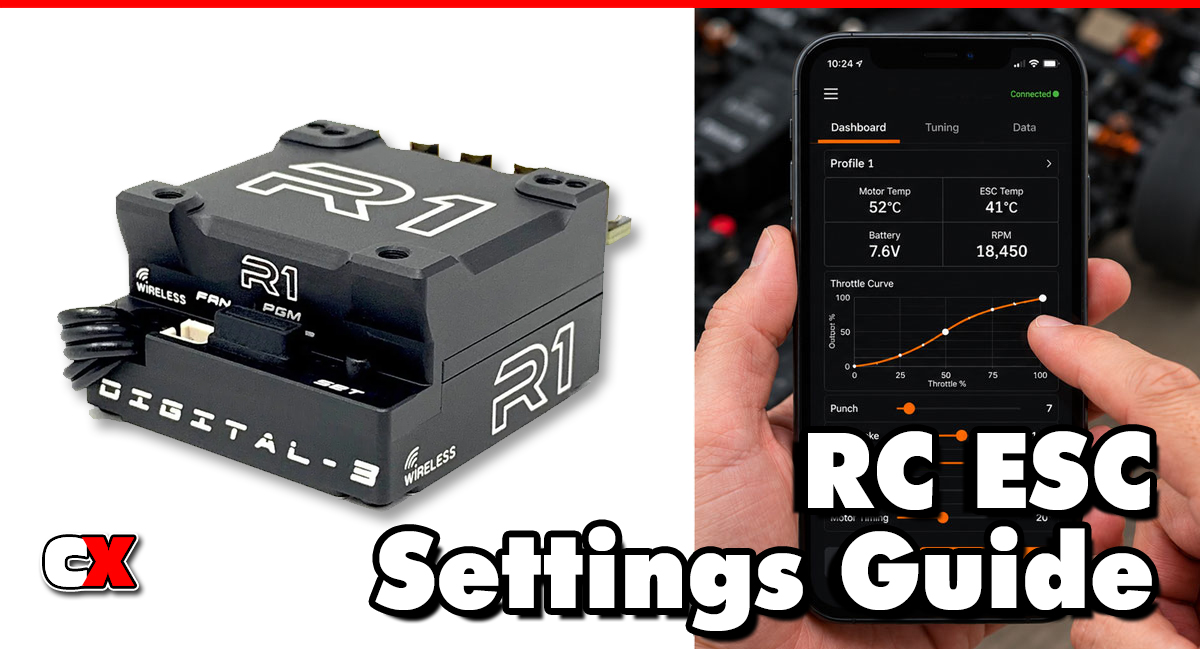
What Is Brake Rate Control?
Brake Rate Control is an ESC setting that adjusts how quickly braking force is applied after the brake trigger is activated.
Instead of instantly applying the full programmed brake force, Brake Rate Control allows the ESC to gradually ramp braking power in over a short period of time.
Think of it as a “brake response speed” adjustment.
For example:
• High Brake Rate Control = Brakes engage quickly and aggressively.
• Low Brake Rate Control = Brakes engage more gradually and smoothly.
The actual maximum brake force does not change. Brake Rate Control only affects how quickly the ESC reaches that braking force.
Many high-end racing ESCs from brands such as Hobbywing, R1 Wurks and Tekin offer Brake Rate Control adjustments as part of their advanced tuning menus.
How Does Brake Rate Control Affect Your Car?
Brake Rate Control has a major impact on vehicle stability during deceleration.
Higher Brake Rate Control
Higher settings cause braking force to build rapidly.
Benefits include:
• Stronger initial braking feel
• Faster speed reduction entering corners
• More aggressive driving characteristics
• Better performance on high-traction surfaces
Drawbacks include:
• Increased chance of rear-end instability
• Easier to lock tires on low-grip surfaces
• More difficult to drive consistently
• Greater risk of traction rolling on high-grip tracks
Drivers who prefer aggressive braking often increase Brake Rate Control to create a more immediate response when entering turns.
Lower Brake Rate Control
Lower settings apply braking force more gradually.
Benefits include:
• Smoother corner entry
• Improved vehicle stability
• Better control on loose surfaces
• Easier driving characteristics
Drawbacks include:
• Longer stopping distances
• Reduced braking aggressiveness
• May feel sluggish to experienced racers
Many drivers use lower Brake Rate Control settings when track conditions become slick or inconsistent.
How Do You Change Brake Rate Control?
The exact procedure varies depending on the ESC manufacturer.
Most programmable ESCs allow Brake Rate Control adjustments through:
• ESC programming cards
• Wireless tuning modules
• Smartphone applications
• Transmitter programming systems
• Computer software interfaces
To adjust Brake Rate Control:
Step 1: Access ESC Programming
Enter the ESC setup menu using the manufacturer’s programming method.
Step 2: Locate Brake Rate Control
Depending on the ESC brand, the setting may be labeled as:
• Brake Rate Control
• Brake Response
• Brake Ramp Rate
• Brake Speed
• Brake Application Rate
Step 3: Make Small Adjustments
Adjust the setting in small increments. A change of only a few percentage points can significantly affect braking feel.
Step 4: Test Drive
Run several laps and focus on:
• Corner entry stability
• Stopping distance
• Brake consistency
• Vehicle rotation
Step 5: Fine-Tune
Continue making small changes until the car feels predictable and easy to drive.
When To Change Brake Rate Control
Brake Rate Control should be adjusted when braking behavior does not match track conditions or driving style.
Increase Brake Rate Control When:
• The car feels lazy entering corners
• More aggressive braking is needed
• Racing on high-traction carpet
• Racing on high-grip asphalt
• Fast direction changes are required
Decrease Brake Rate Control When:
• The rear of the car becomes unstable under braking
• Tires lose traction entering corners
• The car spins while braking
• Track conditions are dusty or loose
• Consistency is more important than aggression
Many racers adjust Brake Rate Control before changing maximum brake force because it can dramatically improve drivability without reducing overall braking power.
What To Check After Adjusting Brake Rate Control
After making changes, evaluate the entire braking system.
Corner Entry Stability
Watch how the car behaves as it transitions from full throttle to braking. A properly adjusted Brake Rate Control setting should allow smooth and predictable weight transfer.
Rear Tire Traction
Look for signs of rear tire instability. Excessive sliding often indicates Brake Rate Control is too aggressive.
Stopping Distance
Measure how effectively the car slows before corners. Too little Brake Rate Control may require braking earlier than desired.
Vehicle Rotation
Observe how the car turns while braking. Some drivers intentionally use Brake Rate Control to help rotate the vehicle into corners.
Motor and ESC Temperatures
Although Brake Rate Control itself usually has minimal impact on temperatures, aggressive braking setups can increase overall system workload.
Always monitor electronics after major setup changes.
Basic Brake Rate Control vs Advanced Settings
Understanding where Brake Rate Control fits within your ESC tuning strategy can make setup decisions much easier.
Basic Brake Rate Control Settings
Most casual drivers should focus on:
• Low
• Medium
• High
These simple settings generally provide enough adjustment for most driving conditions.
The Medium Brake Rate Control setting is the recommended starting point. This provides a balance between braking response and vehicle stability.
Advanced Brake Rate Control Settings
Advanced racers often combine Brake Rate Control with:
• Brake Frequency (PWM Brake)
• Maximum Brake Force
• Initial Brake Force
• Active Drag Brake
• Drag Brake Rate
• Boost Timing
• Turbo Timing
These settings work together to shape how the vehicle slows and rotates during corner entry.
For example:
• High Brake Rate Control + High Maximum Brake Force = Very aggressive braking.
• Low Brake Rate Control + High Maximum Brake Force = Strong braking with smoother engagement.
• High Brake Rate Control + Low Maximum Brake Force = Quick brake response but limited stopping power.
Advanced tuning allows racers to tailor braking characteristics precisely to track conditions and driving style.
FAQ
Q: Does Brake Rate Control change maximum braking power?
A: No. Brake Rate Control only changes how quickly braking force is applied. Maximum Brake Force determines the actual stopping power.
Q: Is Brake Rate Control the same as Brake Frequency (PWM Brake)?
A: No. Brake Rate Control affects how quickly brake force ramps in. Brake Frequency (PWM Brake) affects how smoothly the ESC delivers braking pulses to the motor.
Both settings influence braking feel but work differently.
Q: What is a good starting Brake Rate Control setting?
A: A medium setting is usually the best starting point for most drivers and track conditions.
Q: Should I increase Brake Rate Control on high-grip tracks?
A: Usually yes. Higher traction levels can support more aggressive brake application without losing stability.
Q: Can Brake Rate Control help prevent spins?
A: Yes. Reducing Brake Rate Control often smooths weight transfer and helps maintain rear tire traction during braking.
Q: Does Brake Rate Control affect Drag Brake?
A: Generally no. Brake Rate Control affects braking input from the transmitter, while Drag Brake operates automatically when the throttle returns to neutral.
Back to the RC ESC Settings Guide.

