

RC ESC Brake Frequency (PWM Brake) Explained
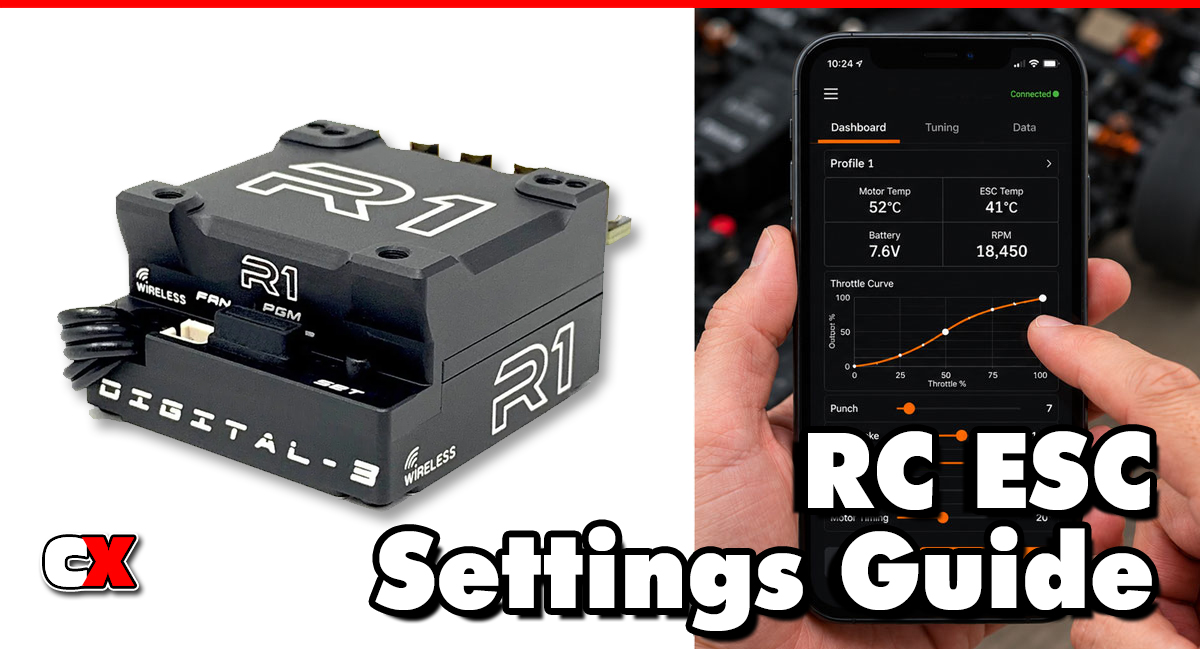
What Is Brake Frequency (PWM Brake)?
Brake Frequency (PWM Brake) controls how frequently the ESC pulses power during braking. PWM stands for Pulse Width Modulation, which is the method ESCs use to control motor output.
When you apply brakes, the ESC does not simply turn braking on and off. Instead, it rapidly pulses the braking force many times per second. Brake Frequency (PWM Brake) determines how fast those pulses occur.
Brake Frequency is typically measured in Hertz (Hz) or Kilohertz (kHz), depending on the ESC manufacturer.
Common examples include:
• 500Hz
• 1kHz
• 2kHz
• 4kHz
• 8kHz
• 16kHz
Different ESC manufacturers may use different ranges, but the principle remains the same.
In simple terms:
• Lower Brake Frequency (PWM Brake) = stronger, more aggressive brake feel
• Higher Brake Frequency (PWM Brake) = smoother, more refined brake feel
Think of it like the difference between a light switch and a dimmer switch. Lower frequencies feel more abrupt, while higher frequencies provide finer control.
How Does Brake Frequency Affect Your Car?
Brake Frequency primarily changes the feel and smoothness of braking rather than the total braking force.
Increasing Brake Frequency
Higher Brake Frequency (PWM Brake) settings typically:
• Produce smoother braking
• Increase brake modulation
• Make braking easier to control
• Reduce rear tire lockup
• Improve consistency on low-grip tracks
• Help prevent sudden weight transfer
Drivers often choose higher frequencies when they need maximum precision entering corners.
Decreasing Brake Frequency
Lower Brake Frequency settings typically:
• Create a more aggressive brake feel
• Increase initial brake bite
• Deliver stronger braking sensation
• Improve stopping response
• Increase weight transfer during braking
• Feel more direct to the driver
Many racers prefer lower frequencies when maximum braking authority is needed.
Track Surface Effects
High-Grip Tracks
Higher Brake Frequency often works well because:
• Tires maintain traction better
• Braking is easier to modulate
• Drivers can carry more corner speed
Low-Grip Tracks
Brake Frequency becomes critical because:
• Aggressive braking can upset the chassis
• Rear tires may slide during corner entry
• Smooth braking improves consistency
A higher Brake Frequency often helps maintain control on slippery surfaces.
How Do You Change Brake Frequency?
Brake Frequency is adjusted through your ESC’s programming system.
Depending on your ESC, this may include:
• ESC programming card
• LCD programmer
• Smartphone app
• Bluetooth adapter
• Wi-Fi programmer
• Computer software
Basic Adjustment Process
1. Connect your ESC programming device.
2. Locate the Brake Frequency (PWM Brake) setting.
3. Record your current value.
4. Increase or decrease the setting in small steps.
5. Test drive the vehicle.
6. Evaluate braking feel and consistency.
7. Repeat until the desired response is achieved.
Recommended Testing Method
Change only Brake Frequency during testing.
Avoid changing:
• Brake Strength
• Drag Brake
• Brake Rate
• Punch
• Timing
Making multiple changes at once makes it difficult to identify what actually improved performance.
When To Change Brake Frequency (PWM Brake)
Brake Frequency should be adjusted when braking feel does not match track conditions or driving style.
Increase Brake Frequency (PWM Brake) When:
• The car feels too aggressive under braking
• Rear tires slide entering corners
• Braking is difficult to modulate
• The car becomes unstable during deceleration
• You want smoother control
Decrease Brake Frequency When:
• Brakes feel weak or delayed
• The car takes too long to slow down
• You want stronger initial brake response
• Corner entry feels lazy
• You prefer a more direct brake feel
Driver Preference Matters
Some drivers prefer smooth and progressive braking.
Others prefer immediate braking response.
Brake Frequency is often adjusted to match personal driving style rather than purely track conditions.
What To Check After Adjusting Brake Frequency
After changing Brake Frequency, evaluate the following:
Corner Entry Stability
Watch for:
• Rear-end sliding
• Excessive rotation
• Understeer during braking
Braking Distance
Check whether:
• The car stops sooner
• The car requires more trigger movement
• Braking points remain consistent
Tire Traction
Monitor:
• Rear tire grip
• Front tire lockup tendencies
• Surface-specific performance
ESC Temperature
Brake Frequency generally has a small impact on ESC temperatures, but it is still worth monitoring after major changes.
Driver Confidence
The best setting is often the one that allows you to drive consistently and predictably.
Fast lap times usually come from confidence and repeatability rather than maximum braking force.
Basic Brake Frequency vs Advanced Settings
Understanding where Brake Frequency fits within ESC tuning helps prevent confusion.
Basic Brake Frequency Settings
Most drivers only need to adjust:
• Low Frequency
• Medium Frequency
• High Frequency
Typical results:
Low – Aggressive, strong bite
Medium – Balanced response
High – Smooth, controllable braking
For most racers, a medium setting is an excellent starting point.
Advanced Brake Frequency Settings
Advanced ESCs may offer:
• Specific Hz values
• Separate Brake Frequency profiles
• Adjustable brake curves
• Independent initial brake settings
• Brake rate adjustments
• Multi-stage braking control
Advanced users often combine Brake Frequency with:
• Brake Strength
• Initial Brake Force
• Drag Brake
• Active Drag Brake
• Brake Rate
These settings work together to create the overall braking feel.
FAQ
Q: Does Brake Frequency change brake power?
A: Not directly. Brake Frequency mainly changes how the braking force is delivered. Brake Strength usually controls maximum braking power.
Q: Is higher Brake Frequency always better?
A: No. Higher settings create smoother braking, but some drivers prefer the stronger feel of lower frequencies.
Q: Can Brake Frequency improve lap times?
A: It can. Improved brake modulation often helps drivers maintain consistency and enter corners more accurately.
Q: Should beginners adjust Brake Frequency?
A: Most beginners should start with the factory setting and focus on learning Brake Strength and Drag Brake first.
Q: Does Brake Frequency affect motor temperature?
A: Usually very little. Any temperature changes are typically minor compared to motor timing, gearing or throttle frequency settings.
Q: What is a good starting point for Brake Frequency?
A: A medium value or factory default setting is usually the safest starting point. From there, adjust based on track grip and driving preference.
Q: Does Brake Frequency work differently on sensored and sensorless systems?
A: The overall concept is the same, but sensored systems often provide more precise brake feel, making Brake Frequency adjustments easier to notice.
Back to the RC ESC Settings Guide.

