
RC ESC Initial Throttle Force Explained
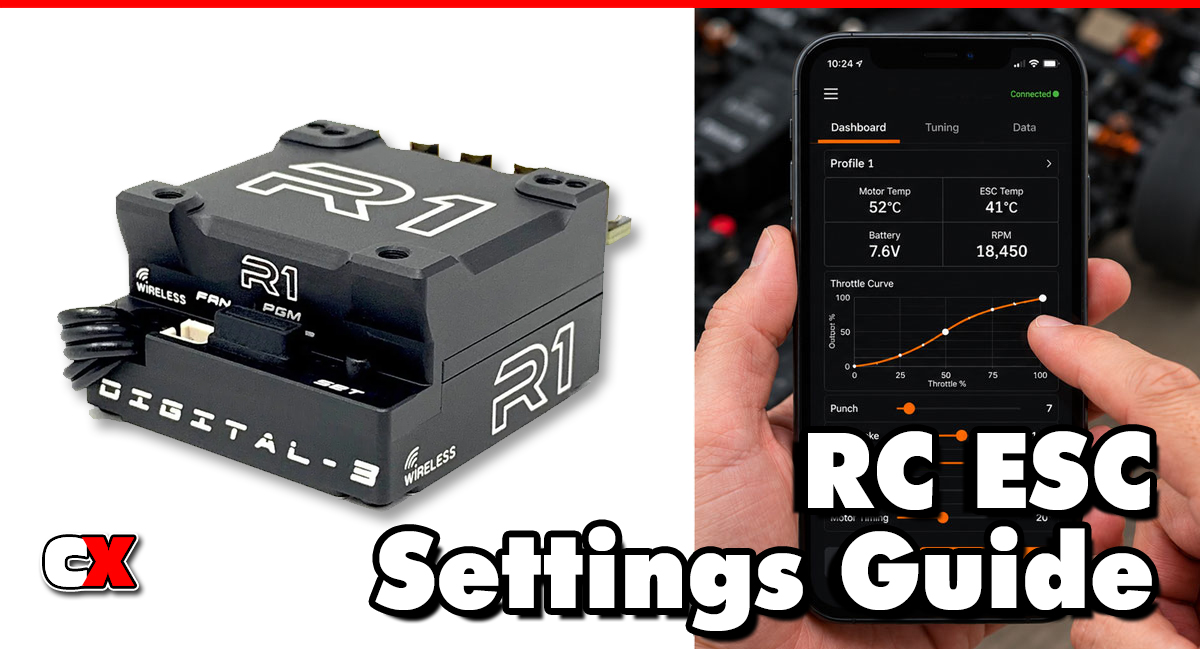
What Is Initial Throttle Force?
Initial Throttle Force is an ESC setting that determines how much motor power is applied when throttle input first moves away from neutral.
Think of it as the amount of “starting force” the ESC delivers during the first moment of acceleration.
When Initial Throttle Force is increased:
• The motor receives more power immediately.
• The vehicle reacts more aggressively to throttle input.
• Acceleration feels sharper and more responsive.
When Initial Throttle Force is reduced:
• Power delivery becomes smoother.
• The vehicle accelerates more gradually.
• Low-speed control is easier to manage.
Many ESC manufacturers express Initial Throttle Force as:
• A percentage
• A level value
• A numerical setting
The exact range varies between ESC brands, but the purpose remains the same – controlling how aggressively the vehicle launches from neutral throttle.
How Does Initial Throttle Force Affect Your Car?
Initial Throttle Force directly affects the first few feet of acceleration.
Higher Initial Throttle Force
Increasing Initial Throttle Force creates:
• Faster throttle response
• Stronger launches
• More aggressive corner exits
• Increased wheelspin potential
• Greater drivetrain stress
Benefits:
• Faster acceleration on high-grip surfaces
• Stronger launches in stock racing classes
• Improved responsiveness for experienced drivers
Potential drawbacks:
• Reduced traction on loose tracks
• Increased tire spin
• Harder-to-drive vehicle
Lower Initial Throttle Force
Reducing Initial Throttle Force creates:
• Smoother acceleration
• Better low-grip performance
• Easier throttle control
• Less wheelspin
Benefits:
• Improved consistency
• Better traction on dusty tracks
• Easier driving for beginners
• Reduced drivetrain shock
Potential drawbacks:
• Slower launches
• Less aggressive corner exits
• Reduced throttle feel
How Do You Change Initial Throttle Force?
Most modern ESCs allow Initial Throttle Force adjustments through:
• ESC programming boxes
• Smartphone apps
• Computer software
• Transmitter programming (on select systems)
General Adjustment Procedure
1. Connect the programming device.
2. Enter the ESC settings menu.
3. Locate the Initial Throttle Force parameter.
4. Increase or decrease the setting.
5. Save the changes.
6. Test drive the vehicle.
7. Make small adjustments as needed.
Recommended Starting Points
| Vehicle Type | Starting Point |
|---|---|
| 2WD Buggy | Low to Medium |
| 4WD Buggy | Medium |
| Touring Car | Medium |
| Stock Racing Classes | Medium to High |
| Off-Road Truck | Low to Medium |
| Rock Crawler | Medium |
| Drag Racing | High |
Always make changes gradually. Large jumps can make it difficult to determine whether performance improved or worsened.
When To Change Initial Throttle Force
Several situations may indicate that an Initial Throttle Force adjustment is needed.
Increase Initial Throttle Force When:
• The vehicle feels lazy leaving corners.
• Acceleration feels delayed.
• The track offers high traction.
• You need stronger launches.
• The motor feels soft at low throttle.
High-grip clay tracks and carpet racing often benefit from higher Initial Throttle Force settings.
Decrease Initial Throttle Force When:
• The tires spin excessively.
• The rear end breaks loose under acceleration.
• The vehicle feels difficult to drive smoothly.
• Track grip is low.
• The car becomes unstable exiting corners.
Loose dirt, dusty surfaces and slick outdoor tracks often respond better to lower Initial Throttle Force settings.
What to Check After Adjusting Initial Throttle Force
After changing Initial Throttle Force, inspect the vehicle carefully.
Corner Exit Performance
Pay attention to:
• Acceleration consistency
• Traction levels
• Vehicle stability
The goal is stronger acceleration without sacrificing control.
Tire Spin
Watch for:
• Excessive wheelspin
• Loss of forward drive
• Rear-end instability
Too much Initial Throttle Force often shows up as tire spin instead of increased speed.
Motor Temperature
Higher Initial Throttle Force can increase current draw.
Check:
• Motor temperatures
• ESC temperatures
• Battery temperatures
If temperatures rise significantly, reduce the setting.
Drivetrain Wear
Aggressive launches place additional stress on:
• Differentials
• Driveshafts
• Spur gears
• Slipper clutches
Inspect components regularly when running higher settings.
Lap Times
The ultimate test is performance. If the vehicle feels faster but lap times do not improve, the setting may be too aggressive.
Consistency usually wins races.
Basic Initial Throttle Force vs Advanced Settings
Many ESCs offer either a simple Initial Throttle Force adjustment or a collection of advanced acceleration settings.
Basic Initial Throttle Force
A basic system usually provides:
• Low
• Medium
• High
• or Level 1 through Level 5
This controls the overall aggressiveness of the initial launch.
Best for:
• Beginners
• Casual racers
• Bashers
Advanced Initial Throttle Force Settings
High-end racing ESCs may allow adjustment of:
Initial Throttle Force Percentage
Sets the exact amount of startup power.
Punch Control
Controls acceleration throughout the throttle range.
Throttle Curve
Adjusts how throttle response changes across trigger movement.
Drive Frequency (PWM Throttle)
Changes motor feel and throttle smoothness.
Boost Timing
Adds RPM-based timing for increased speed.
Turbo Timing
Provides additional top-end power at high throttle.
Advanced racers often combine these settings to fine-tune acceleration characteristics for specific track conditions.
FAQ
Q: Does Initial Throttle Force increase top speed?
A: No. Initial Throttle Force affects acceleration from neutral throttle. Top speed is typically controlled by gearing, timing, motor characteristics and battery performance.
Q: Is Initial Throttle Force the same as Punch?
A: Not exactly. Initial Throttle Force affects the very beginning of throttle application, while Punch usually controls acceleration behavior throughout a larger portion of the throttle range.
Q: Can too much Initial Throttle Force slow my car down?
A: Yes. Excessive wheelspin reduces traction and can actually make the vehicle slower around the track.
Q: Should beginners use high Initial Throttle Force?
A: Usually not. Most beginners benefit from lower settings because the vehicle becomes easier to control and more predictable.
Q: Does Initial Throttle Force affect battery life?
A: It can. Higher settings typically increase current draw during acceleration, which may slightly reduce runtime.
Q: Is Initial Throttle Force useful for crawlers?
A: Yes. A moderate increase can help overcome obstacles, but excessive settings may reduce precise throttle control.
Q: Does every ESC have Initial Throttle Force?
A: No. Those manufacturers that do might use different names such as:
• Startup Force
• Launch Power
• Initial Drive Force
• Starting Punch
The function is generally similar across brands.
Back to the RC ESC Settings Guide.

