
RC ESC Power Curve Explained
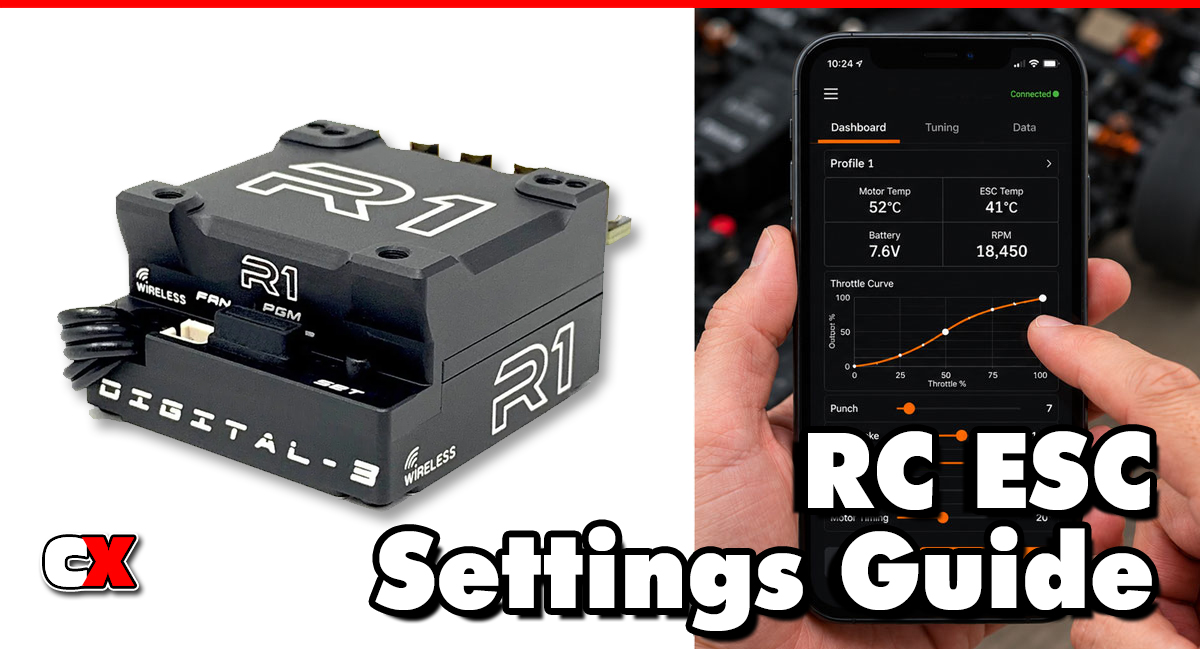
What Is Power Curve?
Power Curve is an ESC setting that adjusts how throttle input is translated into motor power output across the throttle range.
In a standard linear throttle profile:
• 25% throttle input equals approximately 25% motor output
• 50% throttle input equals approximately 50% motor output
• 75% throttle input equals approximately 75% motor output
With Power Curve adjustments, the ESC changes this relationship.
For example:
Soft Power Curve
• Less power at low throttle positions
• More gradual acceleration
• Improved traction on slippery surfaces
Aggressive Power Curve
• More power delivered early in the throttle range
• Faster acceleration
• Increased responsiveness
Think of Power Curve as shaping the “feel” of the throttle without changing the motor’s maximum power.
How Does Power Curve Affect Your Car?
Power Curve has a significant impact on how the vehicle accelerates and responds to throttle input.
Softer Power Curve
A softer Power Curve provides:
• Smoother acceleration
• Reduced wheelspin
• Better control on low-grip tracks
• Easier driving characteristics
• Improved consistency
Drivers often use softer settings when:
• Racing on dusty tracks
• Running on loose dirt
• Driving on wet surfaces
• Learning vehicle control
The vehicle feels calmer and easier to manage.
More Aggressive Power Curve
An aggressive Power Curve provides:
• Faster throttle response
• Stronger acceleration
• Increased corner exit speed
• More punch off the line
• Greater responsiveness
Drivers often use aggressive settings when:
• Racing on high-bite tracks
• Running powerful brushless systems
• Seeking maximum acceleration
• Competing in classes where every tenth of a second matters
The vehicle feels more lively and reactive.
Mid-Range Power Adjustments
Some advanced ESCs allow adjustments to specific areas of the throttle range.
Examples include:
• Soft low-end with strong mid-range
• Aggressive launch with smooth top-end
• Progressive acceleration throughout the throttle range
These adjustments allow very precise tuning for specific track layouts and driving styles.
How Do You Change Power Curve?
The exact procedure depends on your ESC manufacturer. Common adjustment methods include:
ESC Programming Box
Many racing ESCs use:
• Programming cards
• LCD programming boxes
• Bluetooth modules
Navigate to:
Throttle Settings > Power Curve
or Throttle Profile > Power Curve
…depending on the manufacturer.
Smartphone App
Many modern ESCs offer mobile app programming.
Examples include:
• Bluetooth modules
• Wi-Fi interfaces
• Integrated wireless programming
The app may display a graph showing how throttle input relates to power output.
ESC Software
Some competition ESCs allow Power Curve adjustment through computer software.
Users can often:
• Create custom curves
• Adjust multiple throttle points
• Save track-specific setups
• Compare different profiles
Typical Power Curve Options
Depending on the ESC, you may find:
• Linear
• Soft
• Very Soft
• Aggressive
• Very Aggressive
• Custom Curve
Always make small adjustments and test drive the vehicle after each change.
When To Change Power Curve
Power Curve should be adjusted when the vehicle’s throttle response does not match track conditions or driver preference.
Change to a Softer Power Curve When:
• The car spins tires excessively
• The rear end feels unstable
• Traction is limited
• The track is dusty or slippery
• The vehicle is difficult to drive consistently
A softer curve can often improve lap times simply by making the car easier to control.
Change to a More Aggressive Power Curve When:
• The track has excellent traction
• The car feels sluggish
• Acceleration feels weak
• You need stronger corner exit speed
• The vehicle is easy to drive and can handle additional power
More aggressive settings can improve acceleration but may reduce consistency if traction becomes limited.
What to Check After Adjusting Power Curve
After changing Power Curve settings, evaluate several areas of vehicle performance.
Throttle Feel
Check whether:
• Acceleration feels predictable
• Power delivery is smooth
• Vehicle response matches driver preference
Corner Exit Performance
Observe:
• Wheelspin levels
• Rear-end stability
• Ability to apply throttle early
A properly adjusted Power Curve often improves corner exit consistency.
Lap Times
Track performance is more important than feel.
Watch for:
• Faster lap times
• Improved consistency
• Reduced driving mistakes
Sometimes a softer Power Curve produces better overall results.
Motor and ESC Temperatures
Although Power Curve does not directly increase maximum power, aggressive throttle application can increase load.
After a run:
• Check ESC temperature
• Check motor temperature
• Verify operating temperatures remain safe
Battery Consumption
More aggressive power delivery may increase:
• Current draw
• Battery temperature
• Overall energy consumption
Monitor battery performance after major adjustments.
Basic Power Curve vs Advanced Settings
Basic Power Curve Settings
Most hobby-grade ESCs provide simple options:
• Linear
• Soft
• Medium
• Aggressive
Advantages:
• Easy to understand
• Quick setup
• Suitable for most drivers
These presets work well for casual racing and recreational driving.
Advanced Power Curve Settings
High-end racing ESCs may provide:
• Multi-point throttle mapping
• Custom throttle graphs
• Independent low, mid and high throttle adjustments
• Multiple stored profiles
Advantages:
• Maximum tuning flexibility
• Track-specific optimization
• Precise throttle feel customization
Advanced settings are most useful for experienced racers seeking the last bit of performance.
FAQ
Q: Does Power Curve increase top speed?
A: No. Power Curve changes how power is delivered throughout the throttle range. Maximum top speed remains largely unchanged unless other ESC settings are modified.
Q: Is Power Curve the same as Punch Control?
A: No. Punch Control limits how aggressively power is applied during acceleration. Power Curve changes the relationship between throttle position and motor output throughout the throttle range.
Q: Should beginners use an aggressive Power Curve?
A: Usually not. Most beginners benefit from a softer or linear Power Curve because it improves vehicle control and consistency.
Q: Can Power Curve improve traction?
A: Yes. A softer Power Curve can reduce wheelspin and help the tires maintain grip on low-traction surfaces.
Q: Can a Power Curve help on loose dirt tracks?
A: Absolutely. Many racers use softer Power Curve settings on loose dirt to improve drivability and corner exit traction.
Q: Is a linear Power Curve best?
A: Not necessarily. Linear settings offer predictable behavior, but track conditions and driving style often determine whether a softer or more aggressive Power Curve performs better.
Q: Does every ESC offer Power Curve adjustments?
A: No. Some entry-level ESCs only provide basic throttle profiles, while advanced racing ESCs offer extensive Power Curve customization.
Back to the RC ESC Settings Guide.

