

RC ESC Turbo Timing Explained
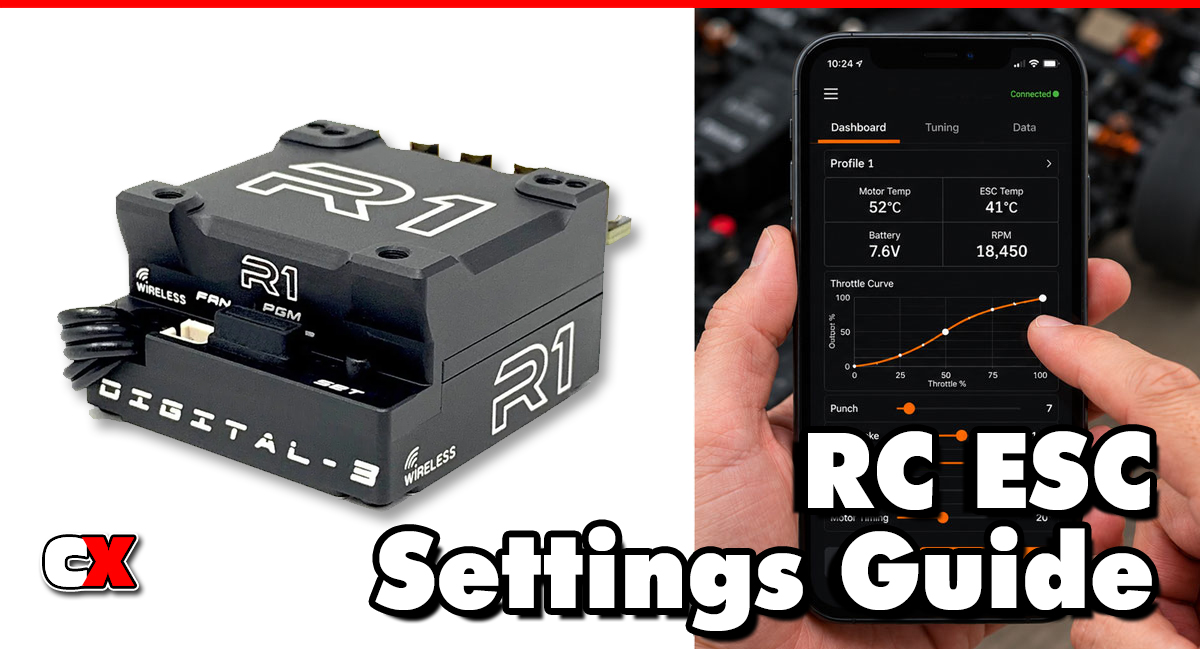
What Is Turbo Timing?
Turbo Timing is an electronic timing advance feature built into many racing Electronic Speed Controllers (ESCs). It automatically adds motor timing once the throttle reaches a specific position or RPM threshold.
Unlike static motor timing, which is always active, Turbo Timing only activates when certain conditions are met. This allows drivers to maintain smooth low-speed control while gaining additional RPM and speed at higher throttle positions.
Think of Turbo Timing as a performance boost that activates during acceleration or at full throttle.
When Turbo Timing activates, the ESC advances the motor timing electronically, causing the motor to spin faster and produce more RPM.
Common Turbo Timing Settings
Depending on the ESC manufacturer, Turbo Timing may be adjustable in:
• Degrees of timing advance
• Activation RPM
• Activation throttle percentage
• Turbo Delay
• Turbo Rate
• Turbo Slope
For example:
• 0° Turbo Timing = No additional timing
• 10° Turbo Timing = Mild increase in RPM
• 20° Turbo Timing = Noticeable increase in speed
• 30°+ Turbo Timing = Aggressive racing setup
The available range varies by ESC model.
How Does Turbo Timing Affect Your Car?
More Turbo Timing
Increasing Turbo Timing generally results in:
• Higher top speed
• Increased motor RPM
• Stronger acceleration at higher speeds
• Faster straightaways
• Increased motor heat
• Increased ESC heat
• Higher battery usage
Many racers use Turbo Timing to gain speed at the end of long straights where additional RPM can improve lap times.
Less Turbo Timing
Reducing Turbo Timing generally results in:
• Lower motor temperatures
• Lower ESC temperatures
• More consistent performance
• Longer run times
• Easier vehicle setup
This is often preferred for tight tracks where acceleration and corner speed matter more than outright top speed.
Track Conditions and Turbo Timing
Large Outdoor Tracks
Higher Turbo Timing settings often work well because there are longer straight sections where the extra RPM can be used effectively.
Tight Indoor Tracks
Lower Turbo Timing settings are often preferred because there is less opportunity to reach the speeds where Turbo Timing provides the greatest benefit.
Stock Racing Classes
Turbo Timing is not typically allowed in Stock class racing.
How Do You Change Turbo Timing?
Most modern racing ESCs allow Turbo Timing adjustments through:
• ESC programming card
• ESC programming box
• Mobile app
• ESC setup software
• Radio programming (on supported systems)
Basic Adjustment Process
1. Turn on the transmitter.
2. Turn on the vehicle.
3. Access the ESC programming menu.
4. Locate the Turbo Timing setting.
5. Increase or decrease the timing value.
6. Save the settings.
7. Test drive the vehicle.
8. Monitor temperatures after the run.
Recommended Starting Point
For most racing applications:
• Start with 5° to 10° of Turbo Timing.
• Test motor temperatures.
• Increase in small increments of 2° to 5°.
• Monitor speed and consistency.
Avoid making large changes all at once.
When To Change Turbo Timing
Turbo Timing should be adjusted when you are trying to optimize speed while maintaining safe operating temperatures.
Increase Turbo Timing When:
• The motor is running cool.
• The ESC is running cool.
• You need more straight-line speed.
• The car feels flat at the end of long straights.
• Track conditions favor higher RPM.
Decrease Turbo Timing When:
• Motor temperatures are too high.
• ESC temperatures are too high.
• Battery temperatures are excessive.
• Power feels difficult to control.
• The track has very short straights.
Signs Your Turbo Timing May Be Too Low
• Slow straightaway speed
• Motor remains unusually cool
• Competitors pull away on long straights
Signs Your Turbo Timing May Be Too High
• Excessive motor heat
• ESC overheating
• Reduced efficiency
• Battery swelling or overheating
• Performance fading late in the run
What To Check After Adjusting Turbo Timing
After making any Turbo Timing adjustment, inspect the entire power system.
Motor Temperature
Motor temperature is the most important measurement after increasing Turbo Timing.
Many racers try to keep motor temperatures below approximately:
• 160°F (71°C) for conservative setups
• 180°F (82°C) as an upper racing limit
Always follow your motor manufacturer’s recommendations.
ESC Temperature
Monitor ESC temperatures carefully. Higher Turbo Timing increases ESC workload and can raise temperatures significantly.
Battery Temperature
Excessive battery temperatures may indicate:
• Too much Turbo Timing
• Over-gearing
• Excessive overall timing
Vehicle Speed
Evaluate whether the speed gain actually improves lap times. More speed does not always produce faster laps.
Consistency
Watch for:
• Thermal fade
• Reduced runtime
• Changes in handling caused by increased speed
A slightly slower but more consistent setup often wins races.
Basic Turbo Timing vs Advanced Settings
Understanding the difference between basic and advanced Turbo Timing tuning can help drivers avoid unnecessary complexity.
Basic Turbo Timing Setup
For beginners:
• Set Turbo Timing between 5° and 10°
• Leave activation settings at default values
• Monitor temperatures
• Focus on consistency
This approach provides a safe introduction to electronic timing adjustments.
Advantages
• Easy to tune
• Lower risk of overheating
• Consistent performance
• Suitable for most club racing (if allowed)
Advanced Turbo Timing Setup
Experienced racers often combine Turbo Timing with:
• Turbo Delay
• Turbo Rate
• Boost Timing
• Motor Timing
• RPM-based activation
• Throttle-position activation
The goal is to create a smooth timing curve that delivers maximum speed without generating excessive heat.
Advantages
• Maximum straightaway speed
• Greater tuning flexibility
• Optimized performance for specific tracks
• Better control over timing delivery
Disadvantages
• More difficult to tune
• Increased heat generation
• Requires frequent temperature monitoring
FAQ
Q: Is Turbo Timing the same as Boost Timing?
A: No. Boost Timing gradually adds timing based on RPM throughout the throttle range. Turbo Timing typically activates once a trigger point is reached and then adds a fixed amount of timing.
Q: Does Turbo Timing increase top speed?
A: Yes. Turbo Timing increases motor RPM, which generally increases top speed and straight-line performance.
Q: Can Turbo Timing damage a motor?
A: Excessive Turbo Timing can create excessive heat which may shorten motor life or damage components if temperatures are not monitored.
Q: Should beginners use Turbo Timing?
A: They can, but conservatively. Starting with small amounts of Turbo Timing allows drivers to learn its effects without creating overheating issues.
Q: Does Turbo Timing affect battery life?
A: Yes. More Turbo Timing usually increases current draw and reduces runtime.
Q: Should I adjust gearing when changing Turbo Timing?
A: Possibly. Significant increases in Turbo Timing may require gearing adjustments to maintain safe temperatures and maximize efficiency.
Q: Is more Turbo Timing always better?
A: No. The fastest setup is usually the one that balances speed, efficiency, reliability, and consistency throughout the entire race.
Q: Is Turbo Timing legal in all racing classes?
A: No. Some racing organizations restrict or prohibit Turbo Timing and related settings. Always check your class rules before making adjustments.
Back to the RC ESC Settings Guide.

