
RC ESC Turbo Rate Explained
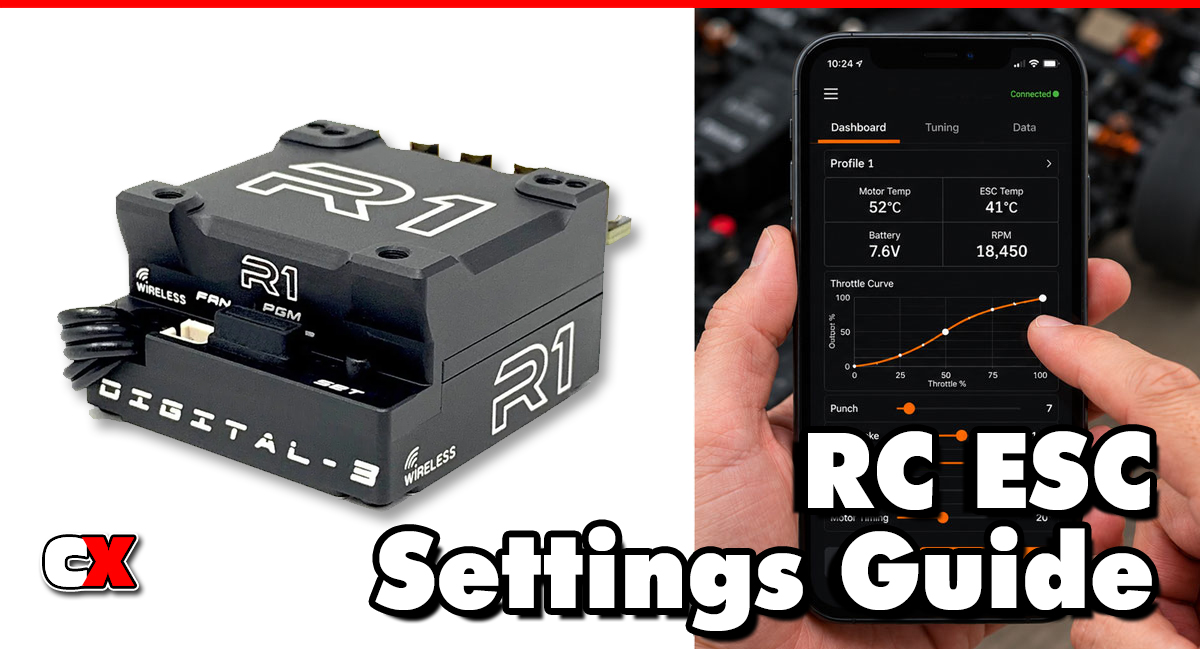
What Is Turbo Rate?
Turbo Rate determines how quickly turbo timing is added once the ESC activates its turbo function.
Most racing ESCs use a combination of:
• Turbo Timing
• Turbo Delay
• Turbo Activation RPM
• Turbo Rate
When turbo becomes active, the ESC does not always apply the full amount of timing instantly. Instead, Turbo Rate controls the speed at which the timing ramps in.
For example:
• Turbo Timing: 20°
• Turbo Rate: Slow
The ESC gradually adds timing until the full 20° is reached.
Or:
• Turbo Timing: 20°
• Turbo Rate: Fast
The ESC reaches the full 20° much quicker. Think of Turbo Rate as the acceleration curve for turbo timing.
A slower setting creates a smoother power delivery, while a faster setting delivers a stronger surge of power.
How Does Turbo Rate Affect Your Car?
Changing Turbo Rate can significantly affect how the car accelerates and feels on the track.
Higher Turbo Rate
A higher Turbo Rate applies turbo timing more aggressively.
Benefits:
• Stronger acceleration
• More punch exiting corners
• Faster speed increase on long straights
• More aggressive throttle feel
Drawbacks:
• Harder to drive on low-grip tracks
• Increased motor temperatures
• Increased ESC temperatures
• Greater chance of wheelspin
Many racers use higher settings on high-bite carpet tracks where traction is plentiful.
Lower Turbo Rate
A lower Turbo Rate applies timing more gradually.
Benefits:
• Smoother acceleration
• Better traction on slippery surfaces
• Easier car control
• Lower operating temperatures
Drawbacks:
• Reduced punch
• Slower speed buildup
• Less aggressive straightaway performance
Lower settings are often beneficial on dusty dirt tracks, asphalt with limited grip or technical layouts with many corners.
Track Conditions Matter
High-Grip Tracks
Higher Turbo Rate settings can improve lap times because the tires can handle the additional power.
Low-Grip Tracks
Lower Turbo Rate settings often improve consistency because the power is introduced more smoothly.
Tight Technical Tracks
A moderate or low setting may improve corner exits and reduce mistakes.
Large Open Tracks
A higher setting can help maximize acceleration and straightaway speed.
How Do You Change Turbo Rate?
The exact procedure depends on your ESC manufacturer, but the process is generally the same.
Step 1: Connect to ESC Programming
Use:
• Programming card
• LCD programmer
• Smartphone application
• Computer software
…depending on your ESC model.
Step 2: Locate Turbo Settings
Navigate to:
• Turbo Timing
• Turbo Activation
• Turbo Delay
• Turbo Rate
Some ESCs may list Turbo Rate as:
• Timing Increase Rate
• Turbo Ramp Rate
• Turbo Response Rate
• Turbo Timing Ramp
Step 3: Adjust the Value
Common formats include:
• Degrees per second (°/sec)
• Percentage values
• Numeric levels
• Slow to Fast scales
Examples:
• 3°/sec = gradual timing increase
• 12°/sec = aggressive timing increase
Step 4: Save the Setting
Store the new value in the ESC and cycle power (if required).
Step 5: Test on Track
Run several laps and evaluate:
• Corner exit acceleration
• Straightaway speed
• Driveability
• Motor temperatures
• ESC temperatures
Only change one setting at a time for accurate comparisons.
When To Change Turbo Rate
Increase Turbo Rate When:
• The track has plenty of traction.
• The car feels lazy on acceleration.
• Straightaway speed builds too slowly.
• Motor and ESC temperatures remain safe.
• You want stronger punch exiting corners.
Decrease Turbo Rate When:
• The car feels difficult to control.
• Rear tires lose traction under power.
• Motor temperatures become excessive.
• The track surface is slippery.
• Power delivery feels too aggressive.
After Changing Other Turbo Settings
You may need to revisit Turbo Rate whenever you change:
• Turbo Timing
• Turbo Delay
• Turbo Activation RPM
• Motor Timing
• Gear Ratio
These settings all work together and can dramatically alter how the car behaves.
What to Check After Adjusting Turbo Rate
Every adjustment should be followed by a careful inspection.
Motor Temperature
Measure motor temperature immediately after a run. Excessively high temperatures indicate that the timing is being applied too aggressively.
ESC Temperature
Check ESC temperatures after several laps. More aggressive timing ramps increase ESC workload.
Corner Exit Traction
Watch for:
• Wheelspin
• Rear-end instability
• Inconsistent acceleration
These symptoms often indicate too much Turbo Rate.
Straightaway Performance
Evaluate whether the car:
• Reaches speed faster
• Carries more speed down straights
• Feels stronger throughout acceleration
Consistency
A car that is easy to drive for five minutes is usually faster than one that feels spectacular for one lap.
Monitor:
• Lap time consistency
• Driver confidence
• Vehicle stability
Basic Turbo Rate vs Advanced Settings
Understanding how Turbo Rate compares to other timing settings helps prevent tuning confusion.
Basic Turbo Rate Setup
For most racers:
• Moderate Turbo Timing
• Moderate Turbo Delay
• Moderate Turbo Rate
Advantages:
• Easy to drive
• Predictable acceleration
• Good temperature control
• Consistent lap times
This is an excellent starting point for beginners and club racers if, of course, Timing is allowed in your class.
Advanced Turbo Rate Setup
Experienced racers often fine-tune:
• Turbo Timing amount
• Turbo Delay
• Turbo Activation RPM
• Turbo Rate
• Motor Timing
• Gear Ratio
Advantages:
• Maximum straightaway speed
• Optimized acceleration
• Precise power delivery
Trade-offs:
• Smaller tuning window
• Higher temperatures
• Increased sensitivity to track conditions
Advanced setups require careful testing and temperature monitoring.
Turbo Rate Tuning Tips
• Start with the ESC’s default setting.
• Increase in small increments.
• Check temperatures after every run.
• Tune traction before adding power.
• Avoid changing multiple timing settings simultaneously.
• Record all adjustments in a setup sheet.
• Focus on lap times rather than raw speed.
FAQ
Q: What does Turbo Rate do?
A: Turbo Rate controls how quickly turbo timing is added after turbo activation begins.
Q: Is Turbo Rate the same as Turbo Timing?
A: No. Turbo Timing determines how much timing is added, while Turbo Rate determines how quickly that timing is applied.
Q: Does increasing Turbo Rate make the car faster?
A: It can improve acceleration and help the car reach top speed sooner, but excessive settings may reduce traction and consistency while adding higher temperatures.
Q: Can Turbo Rate increase motor temperature?
A: Yes. Faster timing application typically increases motor and ESC temperatures.
Q: Should beginners adjust Turbo Rate?
A: Beginners should start with the default setting and focus on consistency before making large adjustments.
Q: Does Turbo Rate affect top speed?
A: Indirectly. It affects how quickly turbo timing is applied, which can help the car reach top speed faster.
Q: What is a good starting Turbo Rate?
A: A medium or default setting recommended by the ESC manufacturer is usually the safest starting point.
Q: Should I adjust Turbo Rate or Turbo Timing first?
A: Most racers establish a suitable Turbo Timing value first, then use Turbo Rate to fine-tune how aggressively that timing is delivered.
Q: Is Turbo Rate (or Turbo Timing) legal in all racing classes?
A: No. Some racing organizations restrict or prohibit Turbo Timing and related settings. Always check your class rules before making adjustments.
Back to the RC ESC Settings Guide.

