

Anatomy of a Belt-Driven Touring Car
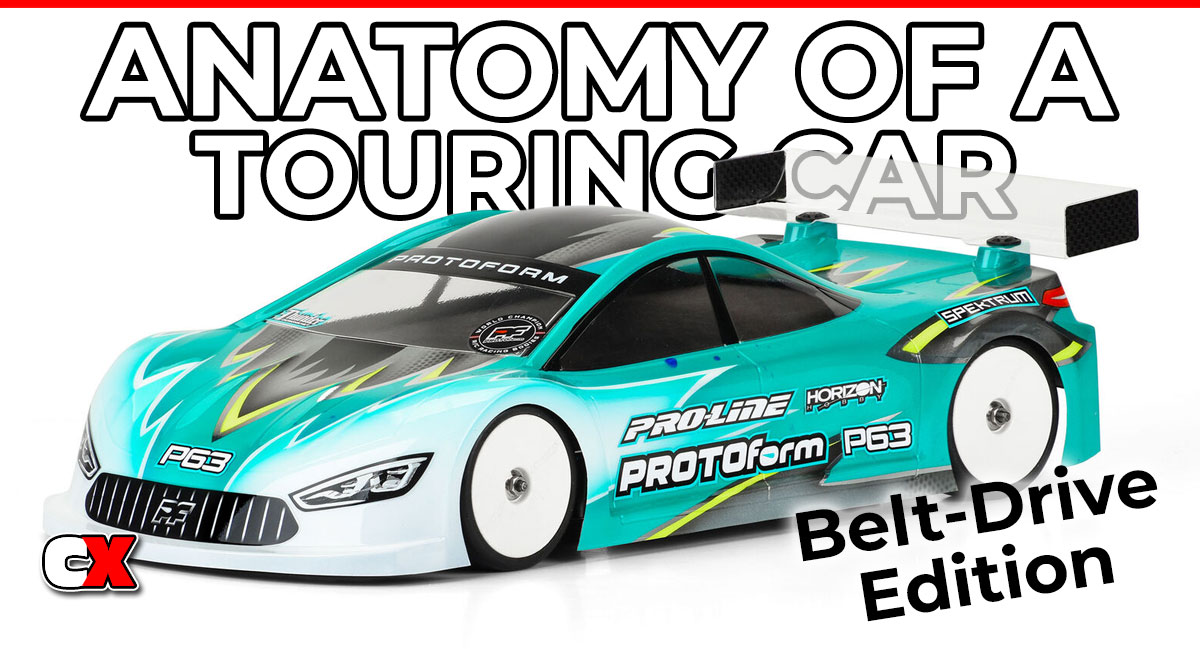
Belt-driven touring cars are some of the most precise and refined RC vehicles you can drive. Built for high-grip surfaces like asphalt and carpet tracks, they rely on a smooth and efficient drivetrain that uses belts instead of gears or shafts.
In this guide, we’ll break down every major component of a belt-driven touring car, explain how they work together, and show you how each part affects performance and tuning.
How a Belt-Driven Touring Car Works
At the core of a belt-driven touring car is a system of belts and pulleys that transfer power from the motor to all four wheels.
Unlike shaft-driven systems, belt drives:
• Deliver smoother power
• Reduce drivetrain shock
• Improve corner consistency
This is why belt systems dominate competitive on-road racing.
Power Flow (Simple Explanation)
Here’s how power moves through the car:
1. Motor spins
2. Spur gear rotates
3. Belts, rolling on pulleys, transfer power to the front and rear
4. Differentials distribute power to wheels
That smooth transfer is what gives touring cars their “locked-in” feel on high-grip tracks.
Full Anatomy Breakdown
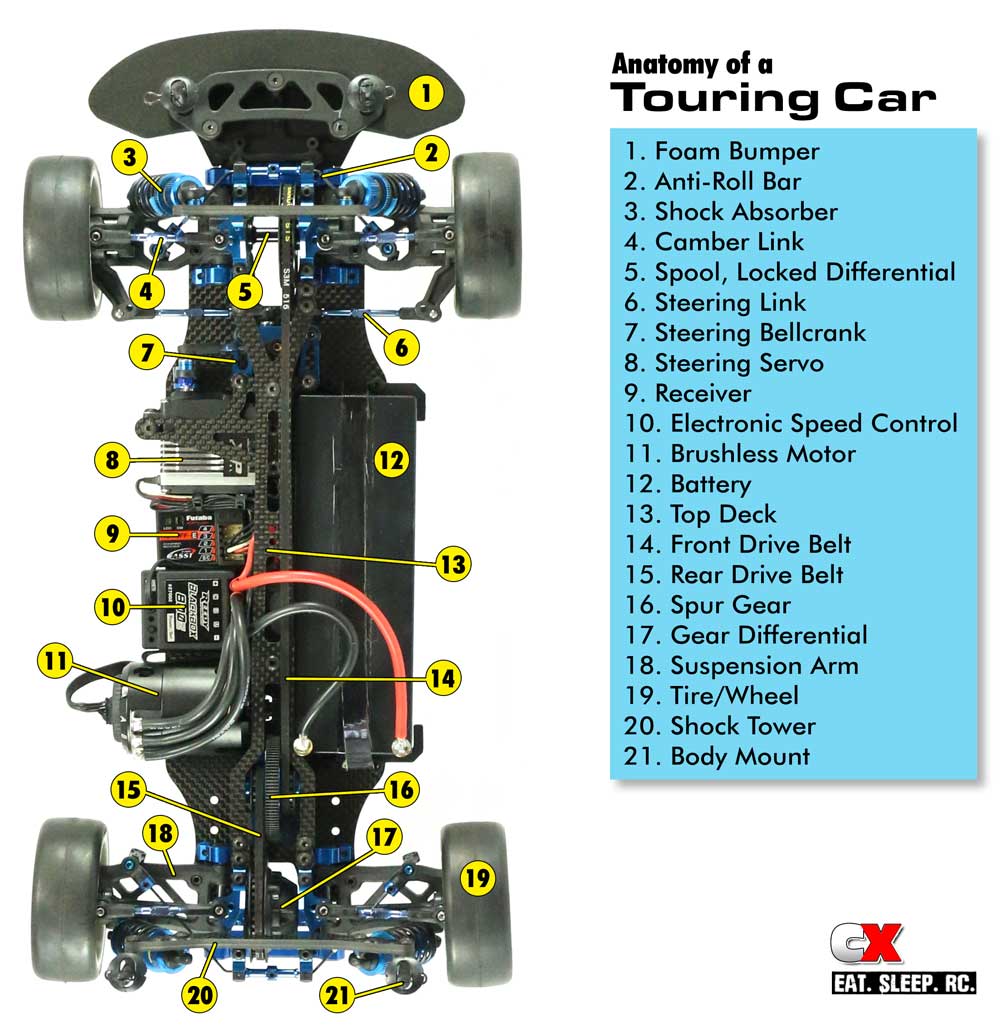 1. Foam Bumper
Absorbs impacts and protects chassis components.
Beginner tip: softer bumpers = better crash protection
2. Anti-Roll Bar
Controls body roll during cornering.
• Stiffer = less roll, more responsive
• Softer = more grip on low traction
3. Shock Absorbers
Control suspension movement.
• Oil weight + springs determine handling
• Critical for tuning balance front vs rear
4. Camber Link
Adjusts camber gain during suspension movement.
• Affects tire contact patch
• Key for corner grip
5. Front Differential (Spool or Gear/Ball Diff)
Controls how power is distributed left/right.
• Spool = maximum steering response
• Gear/Ball diff = smoother, more forgiving
6-7. Steering System (Bellcrank + Links)
Transfers servo input to wheels.
• Impacts steering precision and response
• Works closely with Ackermann geometry
8-11. Electronics (Servo, Receiver, ESC, Motor)
Controls the car:
• Servo = steering
• Receiver = signal hub
• ESC = throttle control
• Motor = the power source
12. Battery
Longer pack offsets electroncis weight.
• Placement affects weight distribution
• Impacts handling and rotation
13. Top Deck
Adds chassis stiffness.
• More flex = more grip
• More stiffness = faster response
14-15. Front and Rear Belts
Core of the drivetrain.
• Transfer power smoothly to both ends
• Require proper tension for efficiency
Belts provide smoother power delivery but require clean conditions and maintenance.
16. Spur Gear
Main drive gear connected to motor.
• Adjust gear ratio here
• Affects acceleration and top speed
17. Rear Differential (Gear/Ball)
Fine-tune how the car rotates and exits corners.
18. Suspension Arms
Allow wheels to move up/down.
• Geometry affects handling balance
19. Tires and Wheels
Most important tuning component.
• Foam vs rubber changes everything
• Tire choice = grip level
20. Shock Towers
Mount shocks and define suspension geometry.
21. Body Mounts
Hold the body shell in place.
• Also affect airflow and downforce positioning
Belt Drive vs Shaft Drive
| Feature | Belt Drive | Shaft Drive |
|---|---|---|
| Power Delivery | Smooth | Instant |
| Maintenance | Higher | Lower |
| Efficiency | High | Moderate |
| Dirt Resistance | Low | High |
| Racing Use | Preferred | Less Common |
Belt drives excel in clean, high-grip environments where smoothness improves consistency.
Maintenance Tips
• Check belt tension regularly
• Remove debris after every run
• Inspect pulleys for wear
• Replace stretched belts early
Beginner Setup Tips
• Start with medium belt tension
• Use gear diff rear / spool front
• Focus on tire setup before anything else
FAQ
Q: What is a belt-driven RC car?
A: A car that uses belts and pulleys instead of shafts to transfer power.
Q: Are belt-driven cars better?
A: They are better for racing and smooth handling, but require more maintenance.
Q: Do belts stretch over time?
A: Yes. Belt tension should be checked regularly.
Q: Why do racers prefer belt drive?
A: Because of smoother power delivery and better corner consistency.
Q: Can beginners use belt-driven cars?
A: Yes, but they require more maintenance than shaft-driven models.

