
RC ESC Active Drag Brake Explained
What Is Active Drag Brake?
Active Drag Brake is an ESC function that applies additional electronic braking force when the throttle returns to neutral. Unlike standard Drag Brake, which creates passive motor resistance (and deactivates when you actually touch the brakes), Active Drag Brake actively commands the motor to slow down more aggressively regardless of you using additional brakes.
Think of it as a combination of Drag Brake and light braking. When you release the throttle, the ESC immediately works to reduce vehicle speed instead of simply allowing the car to coast.
Many high-end ESCs allow you to adjust:
• Active Drag Brake strength
• Initial Active Drag Brake force
• Speed thresholds
• Transition rates
• Trigger points
The exact options vary by ESC manufacturer, but the goal remains the same – improve vehicle control during throttle-off situations.
How Does Active Drag Brake Affect Your Car?
Active Drag Brake has a major impact on vehicle handling and corner entry behavior.
Increasing Active Drag Brake
More Active Drag Brake generally causes:
• Faster vehicle deceleration
• Reduced coasting distance
• Improved corner entry control
• Better rotation in tight turns
• More aggressive throttle-off response
• Improved precision on technical tracks
Drivers often use higher Active Drag Brake settings on:
• High-grip carpet tracks
• Technical indoor layouts
• Tight 1/10-scale racing circuits
• Stock-class racing where momentum control is critical
However, too much Active Drag Brake can cause:
• Rear-end instability
• Excessive weight transfer
• Difficulties maintaining corner speed
• Increased risk of spinning out
Decreasing Active Drag Brake
Less Active Drag Brake generally results in:
• Longer coasting distance
• Smoother vehicle behavior
• Greater corner speed
• Easier driving characteristics
• Improved stability on low-grip surfaces
Lower settings are often preferred on:
• Loose dirt tracks
• Low-grip clay
• Outdoor racing conditions
• High-speed layouts
How Do You Change Active Drag Brake?
The exact process depends on your ESC.
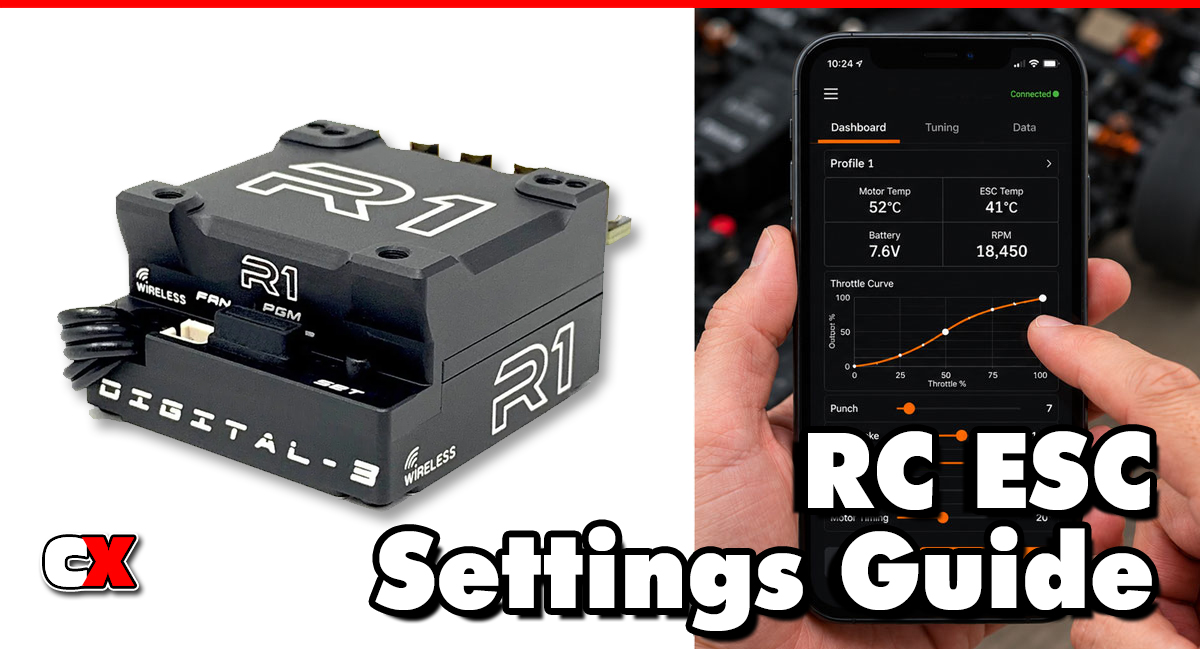
Most modern ESCs allow Active Drag Brake adjustments through:
• ESC programming cards
• LCD programming boxes
• Bluetooth modules
• Smartphone applications
• Computer software
To adjust Active Drag Brake:
Step 1: Access ESC Programming
Open the programming menu using your ESC’s preferred method.
Step 2: Locate Active Drag Brake Settings
Depending on the ESC, the setting may appear as:
• Active Drag Brake
• ADB
• Dynamic Drag Brake
• Smart Drag Brake
• Dynamic Brake Control
Step 3: Adjust the Value
Most ESCs use:
• Percentage values
• Numeric levels
• Strength settings
Begin with the manufacturer’s default value before making changes.
Step 4: Test the Vehicle
Drive several laps under consistent conditions.
Pay close attention to:
• Corner entry
• Vehicle rotation
• Stability under deceleration
• Overall lap consistency
Step 5: Make Small Adjustments
Change settings in small increments rather than making large jumps.
When To Change Active Drag Brake
Active Drag Brake should be adjusted when your car shows specific handling characteristics.
Increase Active Drag Brake When:
• The car carries too much speed into corners.
• You struggle to slow down before apexes.
• The vehicle pushes on corner entry.
• You need more front-end rotation.
• The track has high grip.
• The layout is tight and technical.
Decrease Active Drag Brake When:
• The rear of the car becomes unstable.
• The car spins during throttle release.
• Corner entry feels too aggressive.
• The vehicle loses too much speed entering turns.
• The track has low grip.
• You are driving a high-speed layout.
Surface Considerations
| Setting | Typical Active Drag Brake |
|---|---|
| High-Grip Carpet | Higher |
| High-Bite Clay | Medium to High |
| Prepared Dirt | Medium |
| Loose Dirt | Low |
| Asphalt | Medium |
| Parking Lot Bashing | Low |
What To Check After Adjusting Active Drag Brake
After changing Active Drag Brake, evaluate the following areas:
Corner Entry
Observe whether the car enters corners more predictably.
Rotation
Determine whether the vehicle rotates more easily through tight turns.
Rear Stability
Watch for rear-end stepping out during deceleration.
Corner Speed
Ensure the vehicle is not slowing excessively before reaching the apex.
Motor Temperature
Although Active Drag Brake generally creates less heat than heavy brake usage, aggressive settings can increase ESC and motor workload.
Lap Times
Ultimately, the stopwatch is the best indicator of whether the adjustment improved performance.
Basic Active Drag Brake vs Advanced Settings
Understanding the difference between basic and advanced adjustments can help you tune more effectively.
Basic Active Drag Brake Settings
Most hobby-grade ESCs offer a simple percentage adjustment.
Examples:
• 0% = No Active Drag Brake
• 10% = Mild effect
• 20% = Moderate effect
• 30%+ = Aggressive effect
For most drivers, this single setting provides enough tuning range.
Advanced Active Drag Brake Settings
Higher-end ESCs often provide additional controls.
These may include:
Initial Active Drag Brake
Controls how aggressively braking force begins when throttle returns to neutral.
Active Drag Brake Rate
Determines how quickly braking force is applied.
Speed-Based Active Drag Brake
Changes braking strength depending on vehicle speed.
Brake Transition Curves
Adjusts how smoothly Active Drag Brake blends into normal braking.
Throttle Release Sensitivity
Controls how quickly Active Drag Brake activates after throttle release.
FAQ
Q: Is Active Drag Brake the same as Drag Brake?
A: No. Standard Drag Brake creates passive resistance when the throttle is released and deactivates if you physically apply the brakes. Active Drag Brake applies electronic braking force to slow the vehicle more aggressively, even if you apply physical brakes.
Q: Does Active Drag Brake make the car stop faster?
A: Yes. Active Drag Brake generally reduces coasting distance and can help the vehicle decelerate faster than standard Drag Brake alone.
Q: Should beginners use Active Drag Brake?
A: Yes, but start with low settings. Excessive Active Drag Brake can make a vehicle difficult to drive consistently.
Q: Is more Active Drag Brake always better?
A: No. Too much Active Drag Brake can reduce corner speed and create instability.
Q: Does Active Drag Brake affect battery life?
A: Slightly. Higher Active Drag Brake settings can increase ESC activity, but the impact on runtime is usually minimal.
Q: Does Active Drag Brake work in both sensored and sensorless systems?
A: Many modern ESCs support Active Drag Brake in both systems, although performance and smoothness are often better with sensored setups.
Q: What is a good starting point for Active Drag Brake?
A: For most racing applications, start with the ESC manufacturer’s default setting and adjust in small increments based on track conditions and driving style.
Back to the RC ESC Settings Guide.

