

RC Motor kV Explained (Ultimate Guide)
If you’re just starting out in the RC world, chances are you’ve picked up a RTR of some sort that comes equipped with a brushless motor system. These systems are efficient, require almost zero maintenance and, combined with the current crop of high-output LiPo batteries, can provide an extremely powerful system in your car!
Most of these RTR brushless systems are rated on a kV (or KiloVolt) system. Basically, the higher the kV, the more powerful the motor will be.
However, that’s not the only way a brushless motor is rated. There’s yet another system in place that ranks how powerful a motor is – Motor Turns.
This system has been in place for years, stemming from the way brushed motors were wound back in the day. Both of these systems are correct, but how do they compare?
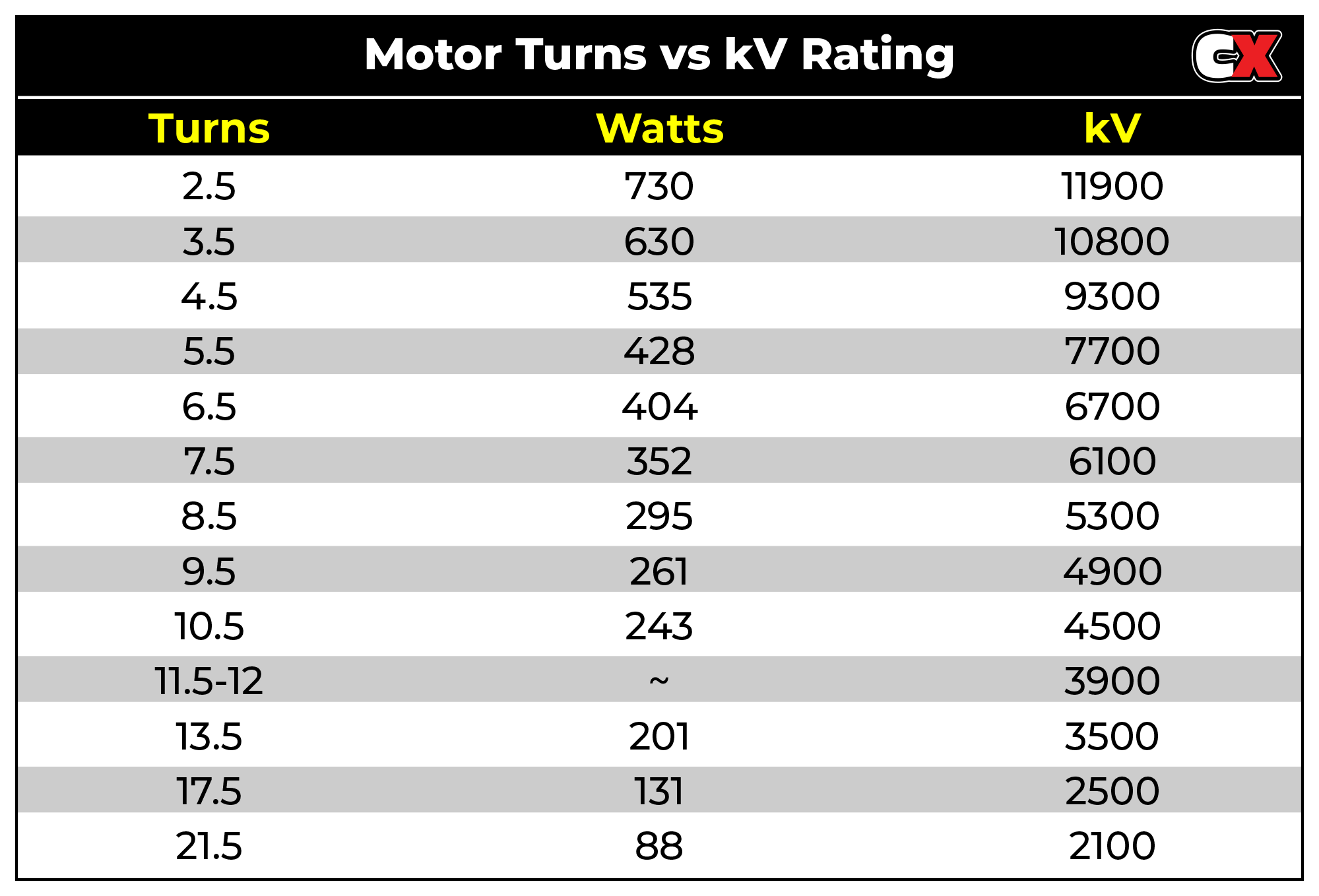
I’ve gathered information from around the web and put together a little chart – Motor Turns-vs-kV Ratings. This little chart helps you gauge what your motor’s kV rating is in Turns and vice versa.
(click for full size image)
The lower the Turns (or higher the kV), the more powerful you motor will be. There are, of course, other factors into the speed of your car (battery count, gearing, etc), but this should give you a basic idea when comparing the two types of motor designations.
Popular Motor Ranges
Now that you know roughly how turns and kV compare, the next step is choosing a motor that fits your vehicle and ESC.
1/10 Onroad Cars
Shop High-Torque Brushless Motors
1/10 Buggy & Stadium Truck
Shop 1/10 Brushless Motors
1/10 Short Course & Monster Truck
Shop High-Torque Brushless Motors
Crawler / Trail Truck
Shop Crawler Brushless Motors
Motor & ESC Combos
Shop Brushless Combos
I hope this Beginner’s Guide to RC article helps you out in your research!

