
Review: Kyosho DBX 2.0
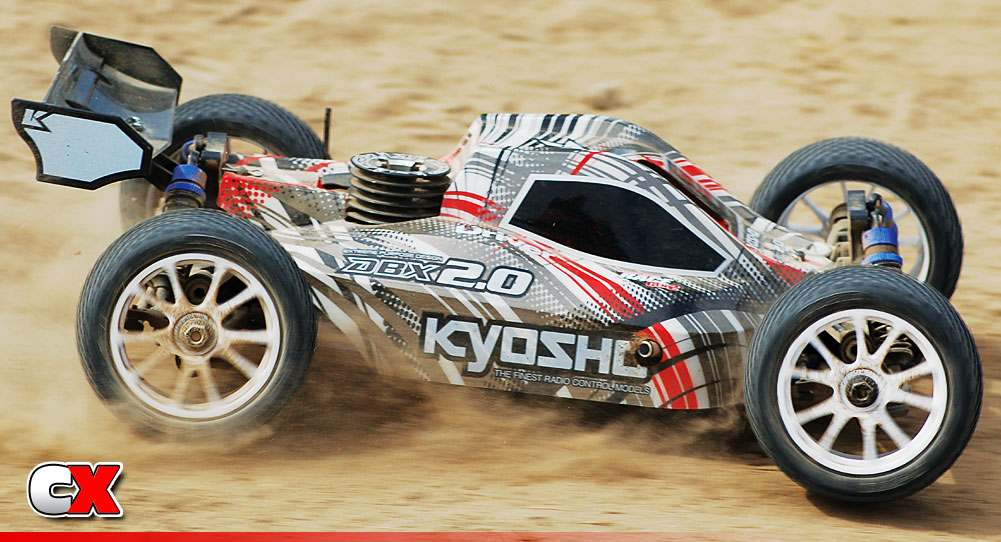
One of the most prestigious racing classes is 1:8th scale. It is like the Formula 1 of RC, and if you’ve been crowned a 1:8th scale World Champion, you are definitely among the elite. This is an enticing thought for some of the newer blood entering our sport, but at the entry level, who can afford the high-dollar supercars it takes to get there? Well Kyosho has a solution. Meet the DBX 2.0, an entry-level 4WD nitro buggy aimed at beginners wanting a taste of 1:8th scale. Unlike the original DBX, the 2.0 features a few upgrades that place it closer to the 1:8th scale family.
WHAT YOU NEED TO KNOW
– Kyosho has released the DBX 2.0 as a comparably-sized 1:8th scale 4wd nitro buggy. Upon further inspection, my measurements put it just a tick under the typical 1:8th scale size. I contacted Kyosho and it was confirmed that the DBX is a tad smaller than 1:8th scale. So, those of you thinking you are getting a 1:10th scale buggy, rejoice that you are getting something bigger than you thought!
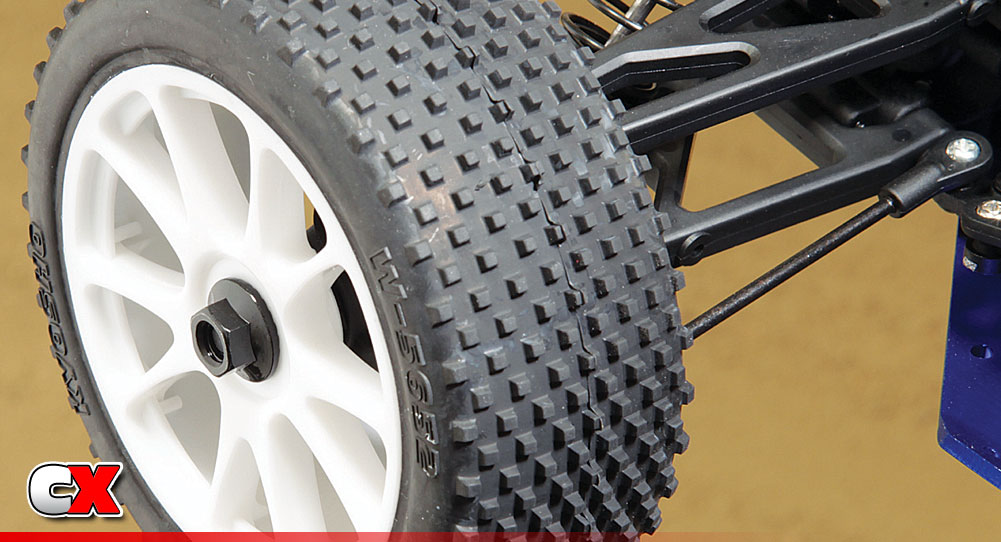 – The DBX 2.0 rolls on a set of sharp-looking 1:8th scale wheels and tires. While not the softest compound you can buy, these tires should work well and last quite a bit longer than those softies. In addition, any 1:8th scale wheel that incorporates the industry-standard 17mm hex will work on the DBX.
– I’m not a nitro guy and wasn’t really looking forward to starting, breaking in and tuning the GXR18 engine. After charging up my glow igniter and adding fuel, I was greatly surprised when it fired up almost right away! I let it idle through the first tank and then set it down to do some tweaking. It responded well and was actually very easy to tune.
 – Dual disc brakes come standard on the DBX 2.0. Also standard is the adjustable brake bias that allows you to fine tune the front and rear braking qualities independently.
– Kyosho has included their new Syncro 2.4GHz transmitter system. This unique-looking radio includes knobs on a top panel for easy access. The knobs control the trims, EPA and servo reversing. It also has a two position trigger neutral point (70/30 or 50/50), making it ideal for both electric and gas powered vehicles.
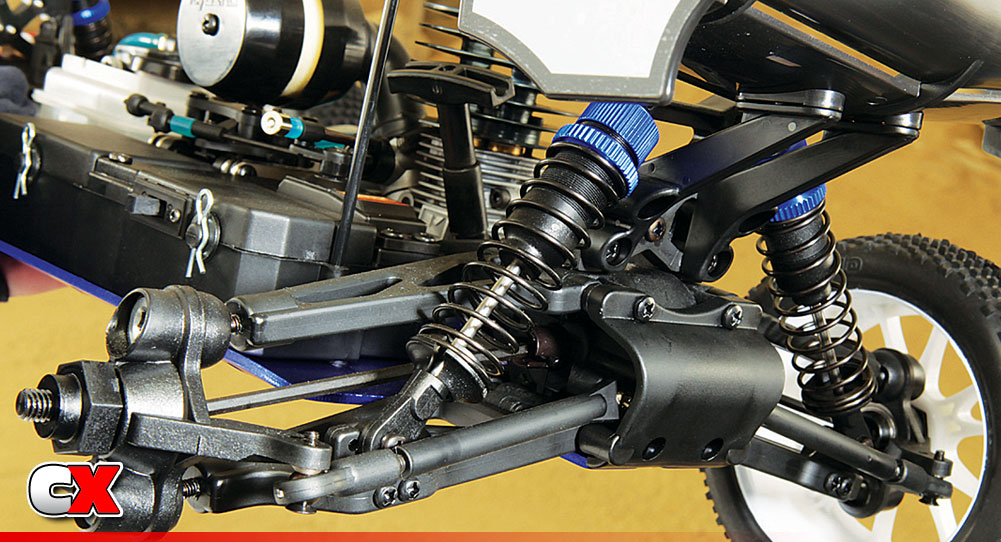
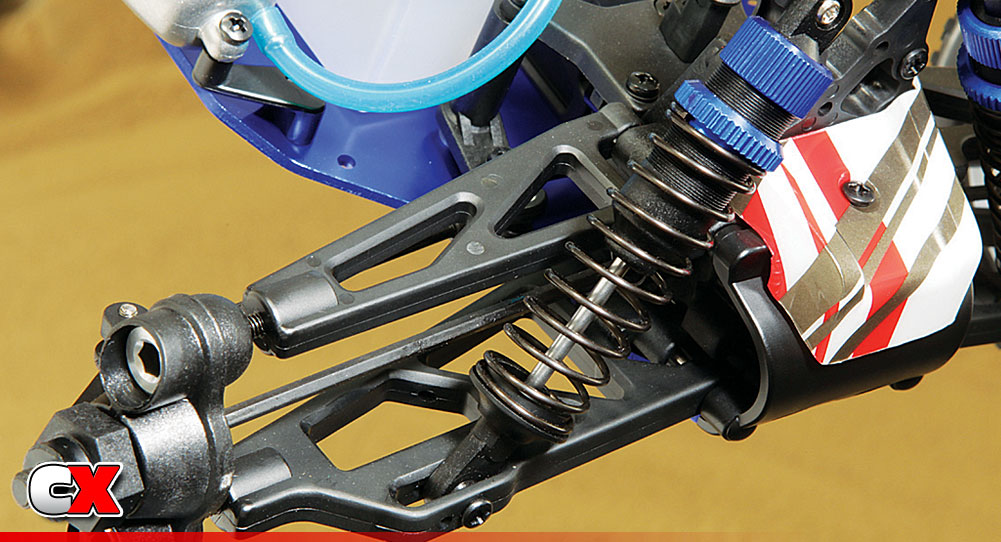
– The DBX 2.0 comes equipped with big bore shocks. These oil-filled dampers did a great job of soaking up the pretty rough terrain at our test site. I even had a chance to utilize the threaded bodies for more ride height. Multiple adjustment holes on the shock towers allow you to tune the suspension to your liking.
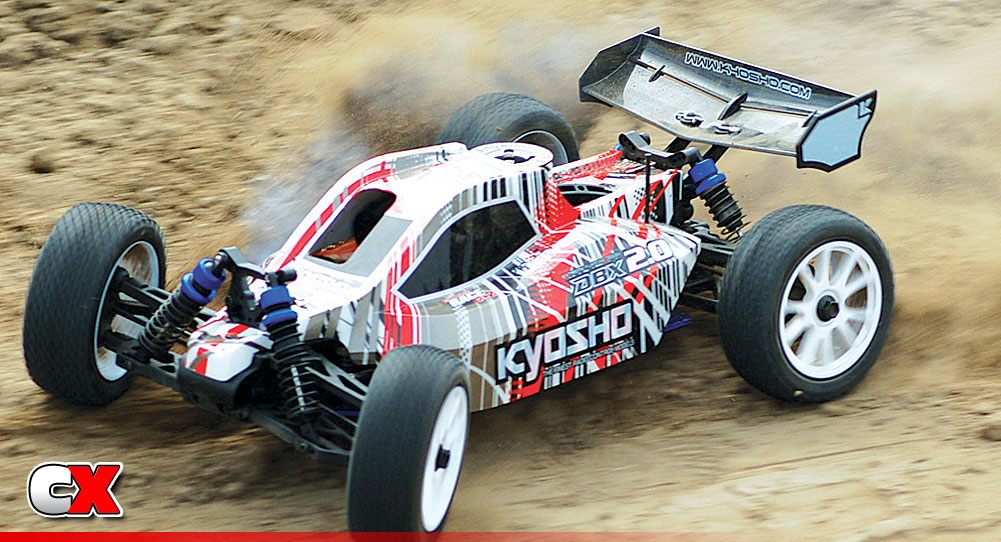
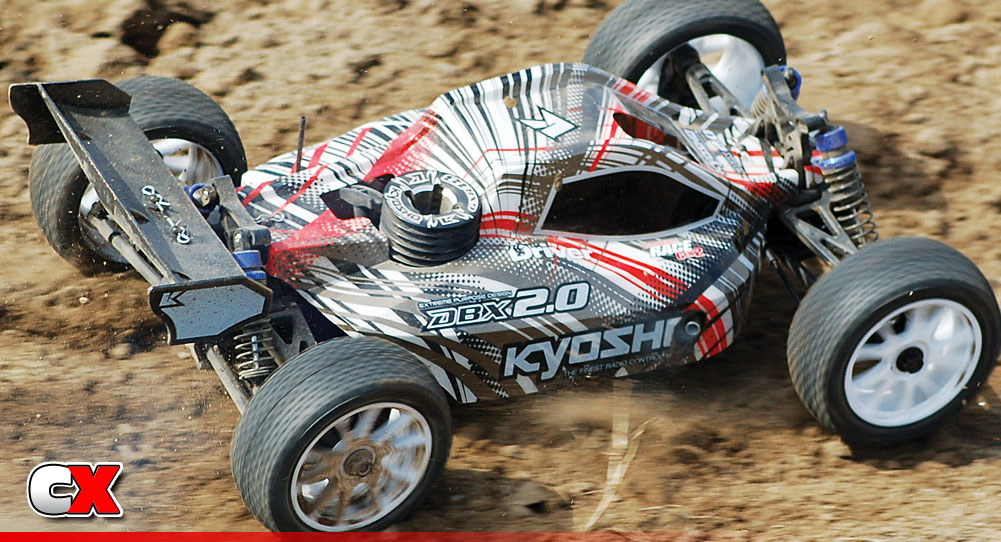
 – One thing that immediately catches your eye is the crazy paint scheme on the racing-bred body. This cab-forward design has hit the offroad buggy market in a big way. By creating more downforce, this helps stabilize the buggy on the track and in the air. Make it pre-cut (and pre-mounted) and add an eccentric 3-color paint scheme (in either blue or red) and you’ve got something that will turn heads!
DESIGN ANALYSIS
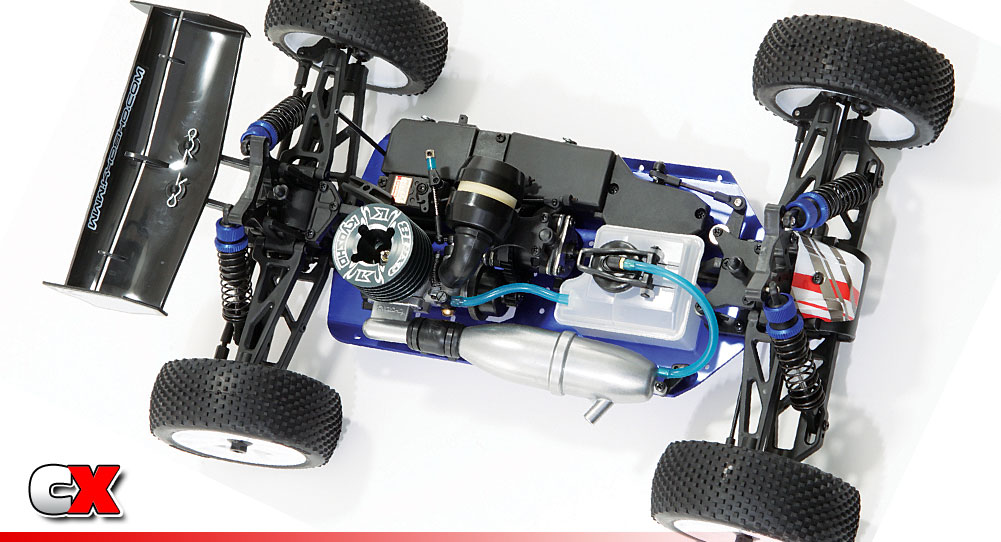
• The Kyosho DBX 2.0’s powertrain is a shaft driven 4WD system. Dual 3mm shafts run the length of the buggy and into the front and rear gearboxes. From there, 3mm shafts extend out the the wheels.
• The front, center and rear differentials are fluid-filled and gear driven. This tunable combo makes for a super-durable design that should last a long time.
 • To help keep repair costs down, Kyosho has made the front/rear and left-right suspension arms, front/rear knuckles and front/rear shock towers interchangeable.
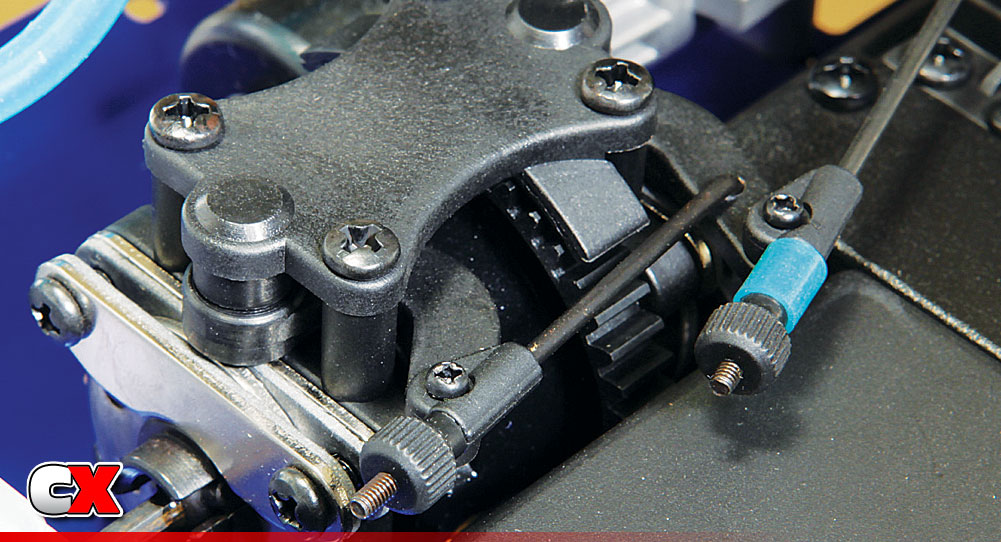
• Brake bias allows you to adjust how much brake force you want to the front and rear wheels independently. While this is not something that might be important to the everyday driver, it does give you an advantage over your race buddies.
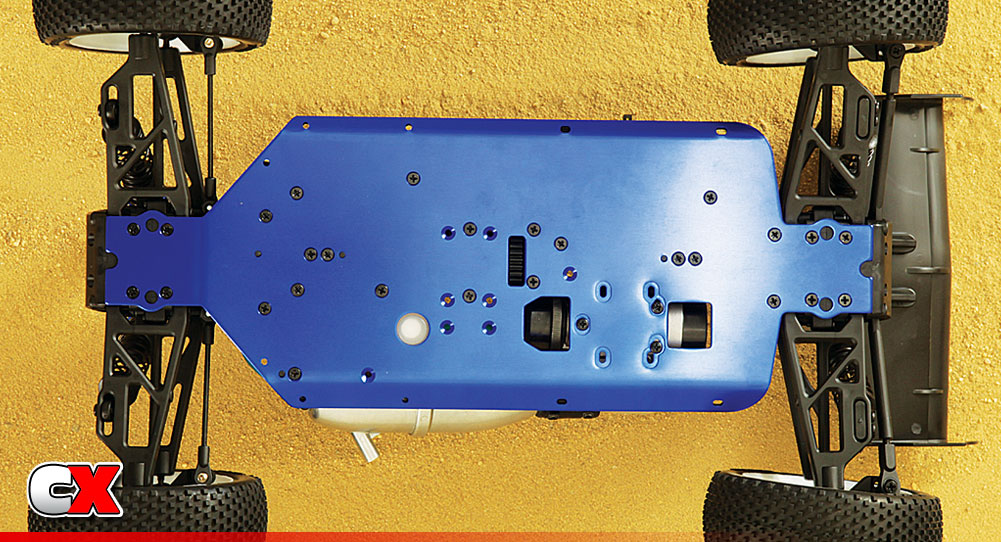
• The DBX 2.0 chassis has multiple motor-mounting holes drilled into it. This should allow you to drop any .18 (or smaller) motor onto the chassis.
• The one piece radio tray is held into place by four screws, allowing easy removal for maintenance.
PERFORMANCE
Test Conditions: Construction site with hard dirt, loose dirt and big rock mounds
STEERING Neutral
The DBX 2.0 houses a Kyosho KS-101BK servo for steering. Rated at 144oz of torque, this servo has no problems wrestling the front tires around. After a few passes through some pretty rough terrain, I did notice a ‘lag’ in steering response. I checked it out and found that the servo saver was pretty loose. Tightening it up and heading back out, that ‘lag’ had disappeared.
BRAKING Good
There are certainly no complaints with the braking power in the DBX 2.0. Another KS-101BK servo is attached to the removable radio tray for throttle/brake duties. This servo has plenty of power to lock up both front and rear brakes and haul the DBX down from any speed.
ACCELERATION Good
I was curious to find out how a 1/8 scale buggy (ok, 1/9 scale) was going to get around using a smaller .18 size engine. I tuned the engine to a tad on the lean side to try and eek out as much power as I could without straining the engine. Overall, the DBX and GXR18 engine had pretty good power to pull itself around and over all the obstacles the construction yard.
SUSPENSION Excellent
You can definitely feel a ‘World-Class’ suspension on the DBX 2.0. The shock package seems near perfect for the battered surface I was running on, and the tuned suspension helped me retain control of the DBX the entire time. Having the ability to have one set of replacement suspension parts is also a bonus! If you added a bit more power, I’m pretty confident that this buggy could hang with some the other big-motor competition!
DURABILITY Excellent
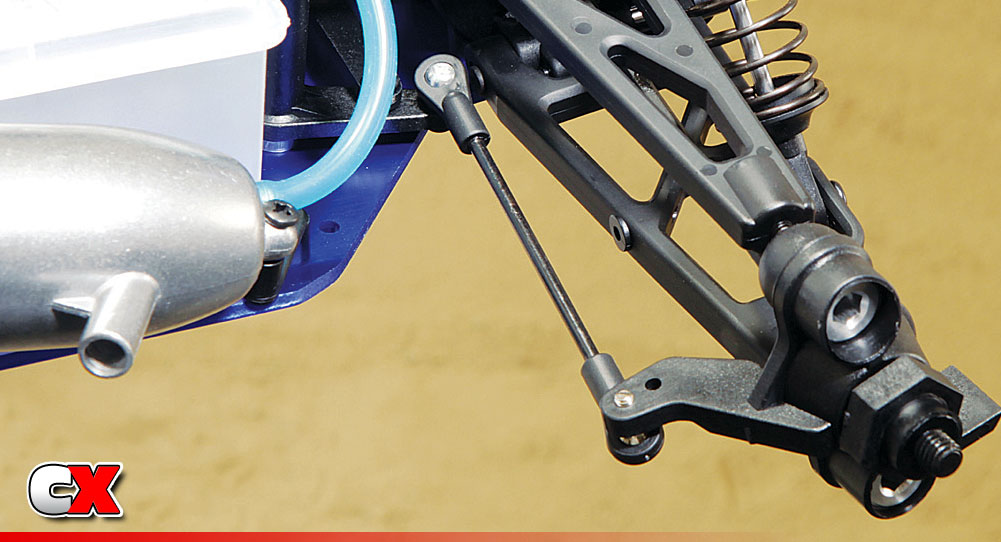
We didn’t experience any major issues with the DBX 2.0 during the test. After the shoot I blew it off with my air compressor and gave it a thorough inspection. Everything appeared great; tires were still glued to the wheels, body didn’t have any cracks, and suspension plastic didn’t show any stress marks. The only,very minor issue was a slightly bent left front turnbuckle. This, however, is an easy fix and shouldn’t keep you out of your racing/bashing situation.
SPECS & TUNING OPTIONS
Kyosho DBX 2.0
DIMENSIONS
LENGTH: 18.7 in. (475mm)
WIDTH: 12.01 in. (305mm)
WHEELBASE: 12.5 in. (320mm)
WEIGHT: 5.5 oz. (2,365g)
SUSPENSION
• Shock position—2 holes in tower, 2 holes in suspension arm
• Camber (F&R)—Adjustable pillow-ball suspension
• Toe—Adjustable turnbuckles
• Wheelbase—Inner suspension arm clips
• Ride height—Threaded shock bodies
DRIVETRAIN
• Diff stiffness—Grease or silicone diff fluids
MAINTENANCE AND TUNING TIPS
• Check and clean your air filter after every run. Since the filter rests right behind the open front window, it gathers quite a bit of dirt.
• Keep an eye on the motor temperature. Everyone wants a bit more speed and leaning out the engine will do that. Leaning it out too much, however, will also destroy it.
• Since the wheels are spoked, debris can enter the axle area from the front or back of the wheel. Make sure you keep this area clear.
• For easier refills, attach a zip-tie to the fuel filter lid. This will help open the tank without having to reach into the body.
GALLERY
LINKS
Kyosho, http://www.kyoshoamerica.com
Max Amps, http://www.maxamps.com
Byron Fuels, http://www.byronfuels.com

