

NiMH vs LiPo vs LiHV vs LiFe: RC Battery Types Explained
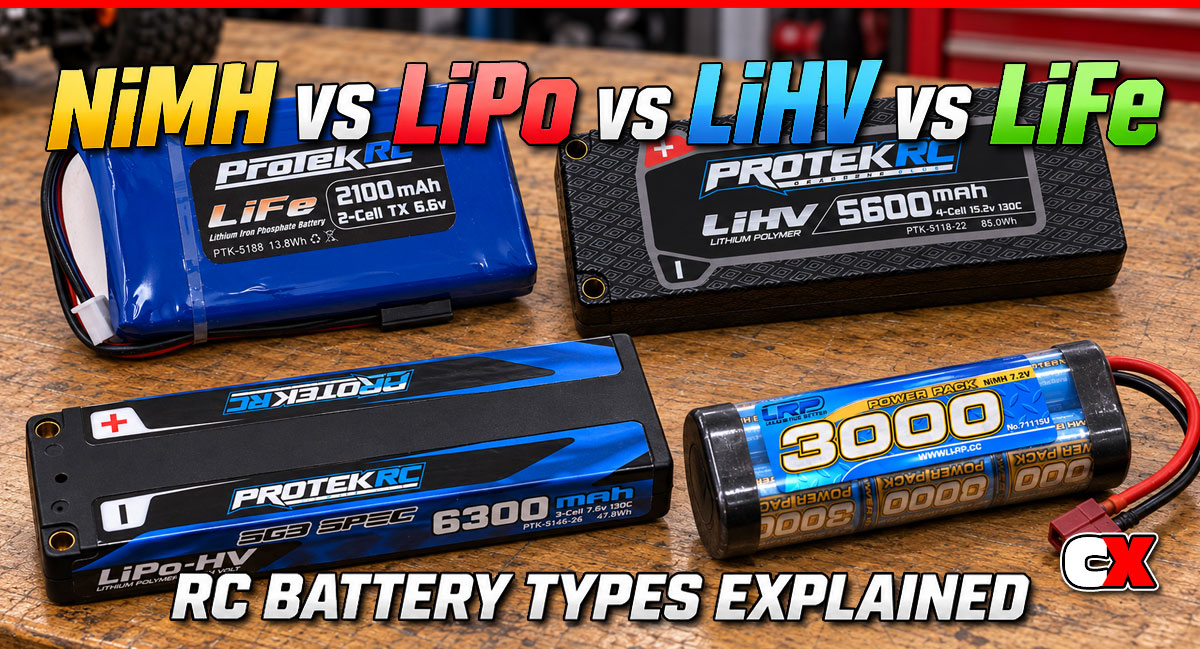
RC batteries have come a long way. Not too many years ago, choosing a battery mostly meant deciding how many NiMH cells you wanted. Today, RC drivers can choose from NiMH, LiPo, LiHV and LiFe batteries, each with different voltages, charging requirements and advantages.
That extra choice is great, but it can also make things confusing.
Can you charge a LiHV battery using LiPo mode? Should a LiPo be stored fully charged? What does charging at 1C mean? Can you charge a 5000mAh battery at 10 amps? And why does your charger have completely different settings for LiPo and LiFe?
Let’s sort it out.
This guide explains the differences between the four battery types you’re most likely to encounter in RC, how to charge them, how to store them and, most importantly, how to use them safely.
Quick Comparison: NiMH vs LiPo vs LiHV vs LiFe
| Battery Type | Nominal Voltage | Full Charge | Typical Everyday Charge Rate | Storage Target | Main Advantage |
|---|---|---|---|---|---|
| NiMh | 1.2v/cell | ~1.5v/cell* | 0.5C-1C | No special storage voltage | Simple and forgiving |
| LiPo | 3.7v/cell | 4.20v/cell | 1C | ~3.8v/cell | Performance and availability |
| LiHV | 3.8v/cell** | 4.35v/cell | 1C | ~3.85v/cell | Higher voltage |
| LiFe | 3.3v/cell | 3.6v/cell | 1C | ~3.3v/cell | Stability and long cycle life |
* NiMH chargers normally terminate charging using delta-peak detection rather than simply charging to a fixed voltage.
** Some chargers and battery documentation may identify LiHV nominal voltage differently. Always follow the specifications supplied with your particular battery.
For most RC cars today, LiPo is the most common battery type, but that doesn’t automatically make it the right battery for every vehicle. NiMH is easier for beginners, LiHV offers additional voltage for compatible applications, and LiFe can be an excellent choice for receiver packs and other lower-voltage applications.
These are conservative everyday recommendations for RC hobbyists. Some batteries are specifically rated by their manufacturers for higher charging rates. That does not mean every battery using the same chemistry can safely be charged at that rate.
The most important rule in this entire guide is simple:
The battery manufacturer’s specifications always take priority over a general charging recommendation.
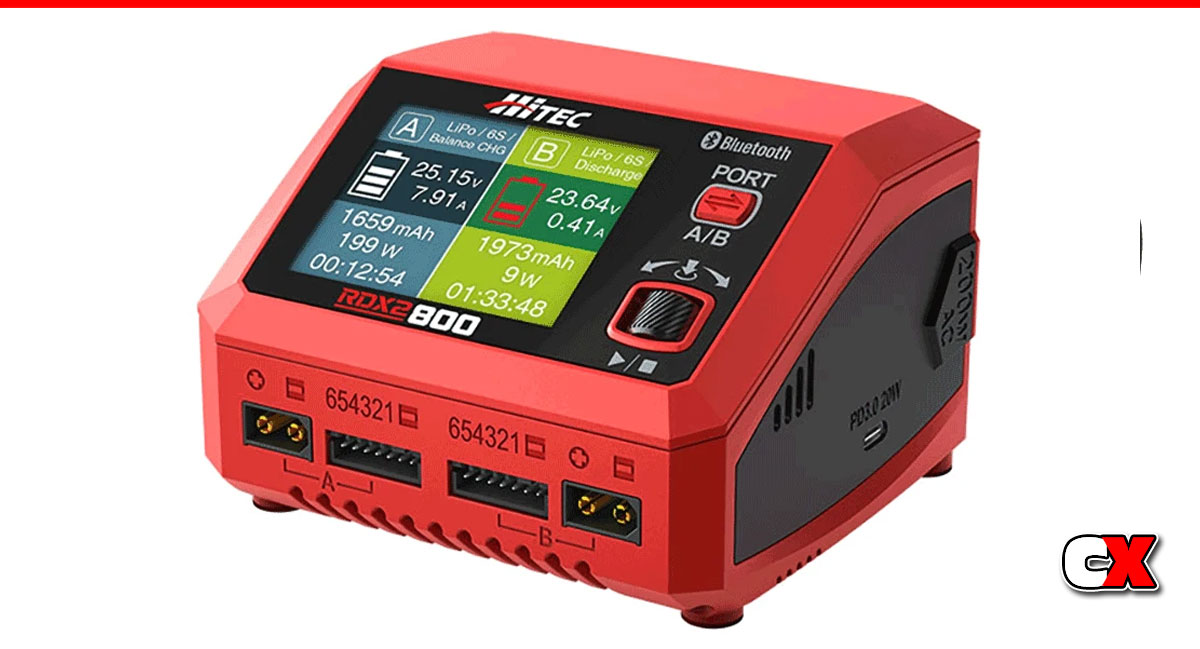
Understanding Charge Rate: What Does 1C Mean?
Before comparing battery types, you need to understand C-rate.
A battery’s charge rate is often expressed as a multiple of its capacity. For example, a 5000mAh battery has a capacity of 5Ah.
For that battery:
– 0.5C = 2.5 amps
– 1C = 5 amps
– 2C = 10 amps
– 3C = 15 amps
– 4C = 20 amps
(Also see What Does C Rating Mean on a LiPo Battery?)
A smaller 3000mAh battery charged at 1C would therefore be charged at 3 amps. A 6000mAh battery at 1C would be charged at 6 amps.
This is why saying “I charge my batteries at 5 amps” doesn’t tell us much. Five amps could be 0.5C for a 10,000mAh battery or 2.5C for a 2000mAh battery.
For beginners, 1C is a good conservative charge rate for most RC lithium batteries unless the battery manufacturer specifies otherwise.
Some racers charge modern LiPo or LiHV batteries at dramatically higher currents. It’s not unusual to hear about racers charging at 20, 30 or even 40+ amps in an effort to change battery characteristics or maximize performance. I do this all the time, but safely and with batteries that can handle the extra push.
That doesn’t make it a good general recommendation.
High-rate charging creates additional heat and stress, requires batteries specifically designed to tolerate it and leaves much less margin for error. CompetitionX does not recommend extreme charge rates for normal hobby use, especially for beginners.
If you don’t have a specific reason to charge faster, don’t.
NiMH Batteries
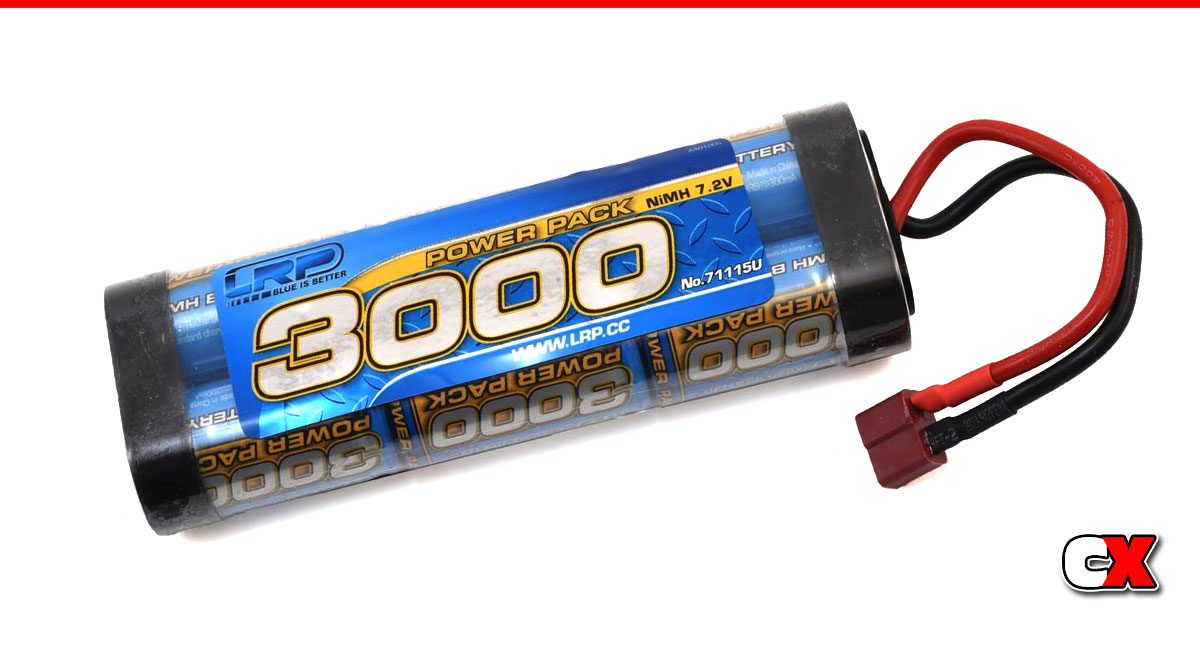 Nickel-Metal Hydride, or NiMH, batteries were the standard rechargeable battery for RC vehicles for many years. They are still commonly included with beginner-level RTR vehicles.
A single NiMH cell has a nominal voltage of approximately 1.2 volts. So, a traditional 6-cell pack therefore has a nominal voltage of 6 × 1.2v = 7.2v. A 7-cell pack is approximately 8.4v.
Unlike lithium batteries, NiMH packs don’t require balance leads or individual cell monitoring during normal charging.
Why Use NiMH?
NiMH’s biggest advantage is simplicity.
They’re relatively forgiving, inexpensive and easy for beginners to understand. They also don’t require the same storage-voltage management as lithium batteries.
Their disadvantages are weight, lower energy density and greater voltage drop under load compared with modern lithium batteries.
For a high-performance race vehicle, LiPo has largely replaced NiMH. For a beginner RTR, vintage RC car or vehicle where simplicity matters more than maximum performance, NiMH can still be an excellent choice.
Although a little harder to find, places like AMain Hobbies still carries a good selection of NiMh batteries.
Charging NiMH Batteries
NiMH batteries require the NiMH setting on your charger, which most current units do still offer.
Unlike lithium charging, which terminates at a precise maximum cell voltage, a smart NiMH charger typically watches for a small voltage drop known as delta peak to determine when the battery is full.
For normal hobby use, approximately 0.5C to 1C is a sensible charging range. So, a 3000mAh NiMH pack at 1C would be charged at approximately 3 amps.
Some NiMH cells and packs can tolerate higher rates, and some charger documentation allows rates above 1C. As with lithium batteries, however, the pack manufacturer’s recommendation should determine your maximum charge rate.
NiMH packs normally become warm toward the end of charging. Excessive heat is another matter. A battery that becomes unusually hot should be disconnected and inspected.
Storing NiMH Batteries
NiMH batteries do not have a specific storage voltage like LiPo batteries. Simply store them in a cool, dry location away from conductive materials that could short the terminals.
NiMH batteries gradually self-discharge while sitting, although modern low-self-discharge cells can retain their charge much better than older designs.
For long periods of storage, periodically check the pack rather than allowing it to sit forgotten for months or years.
LiPo Batteries
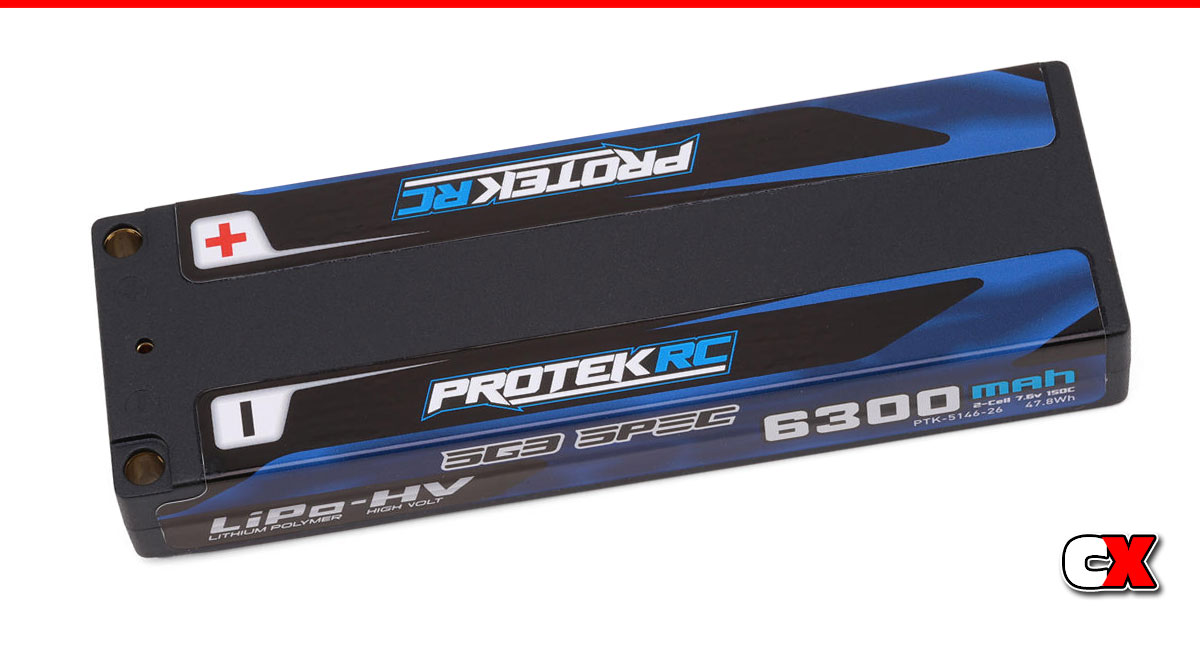 Lithium Polymer, or LiPo, is currently the dominant battery chemistry in performance RC.
A standard LiPo cell has a nominal voltage of 3.7v and a maximum fully charged voltage of 4.20v.
(Also see: Understanding LiPo Battery Voltage)
That gives us familiar RC battery voltages:
• 2S LiPo: 7.4v nominal, 8.4v fully charged.
• 3S LiPo: 11.1v nominal, 12.6v fully charged.
• 4S LiPo: 14.8v nominal, 16.8v fully charged.
LiPo batteries offer excellent energy density, high discharge capability and relatively low weight. That’s why you’ll find them everywhere from 1/10-scale race cars to giant bashers.
Charging LiPo Batteries
For routine charging, 1C is our recommended starting point unless the battery manufacturer says otherwise. So, for a 5000mAh pack: 5000mAh = 5Ah.
Therefore, in this case, 1C = 5 amps.
If the manufacturer says that particular pack supports a 2C maximum charge rate, it could theoretically be charged at 10 amps.
But “maximum” doesn’t mean “recommended every time.”
Slower charging generally places less stress on the battery. Unless saving a few minutes is important, there is little reason for the average hobbyist to push the battery to its maximum rated charge current.
Whenever possible, use your charger’s Balance Charge function. The balance connection allows the charger to monitor the individual cells and bring them to the same voltage as the battery approaches full charge.
(Also see: RC Battery Connectors and Balance Plugs Explained)
LiPo Storage Voltage
LiPo batteries should not be stored fully charged or nearly empty for extended periods. A common storage target is approximately 3.8v per cell.
That means approximately:
• 2S LiPo: 7.6v
• 3S LiPo: 11.4v
• 4S LiPo: 15.2v
Don’t worry about manually hitting these numbers exactly.
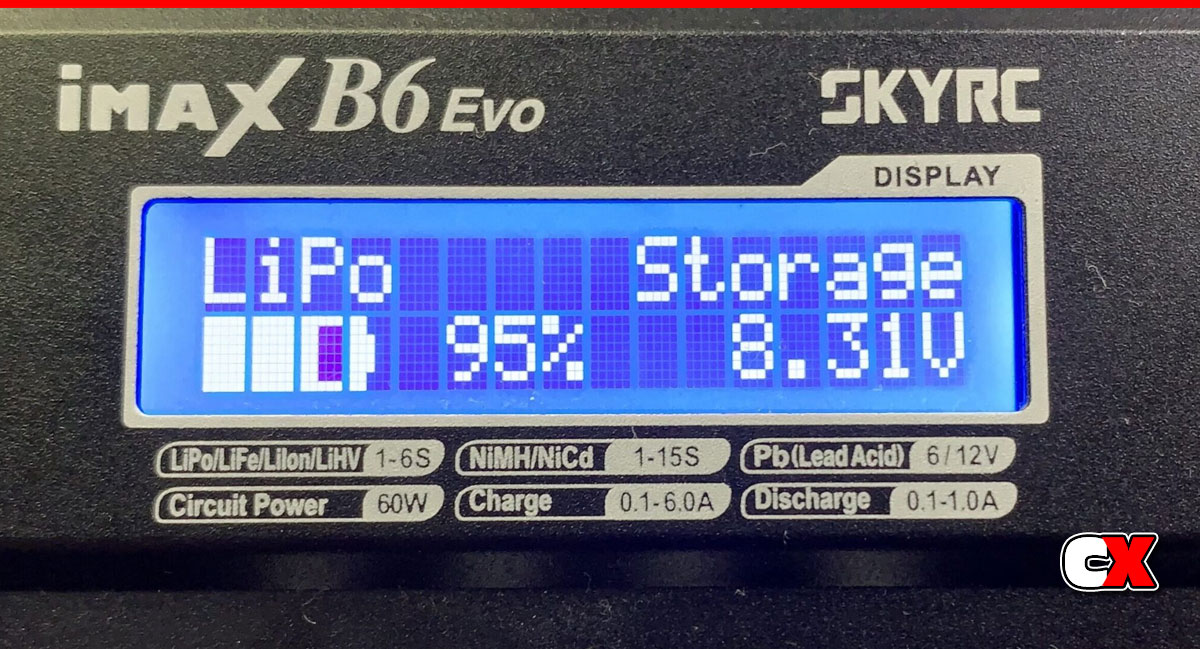
Modern computerized chargers typically have a Storage program. Connect the battery, select the correct chemistry and cell count, and the charger will either charge or discharge the pack until it reaches an appropriate storage voltage.
This is why “storage charge rate” can be a misleading term. The important specification is the storage voltage. Depending on the battery’s current state of charge, your charger may need to put energy into it or remove energy from it.
If you’re finished running for the weekend and don’t expect to use the battery again soon, putting it into Storage Mode is a good habit.
LiHV Batteries
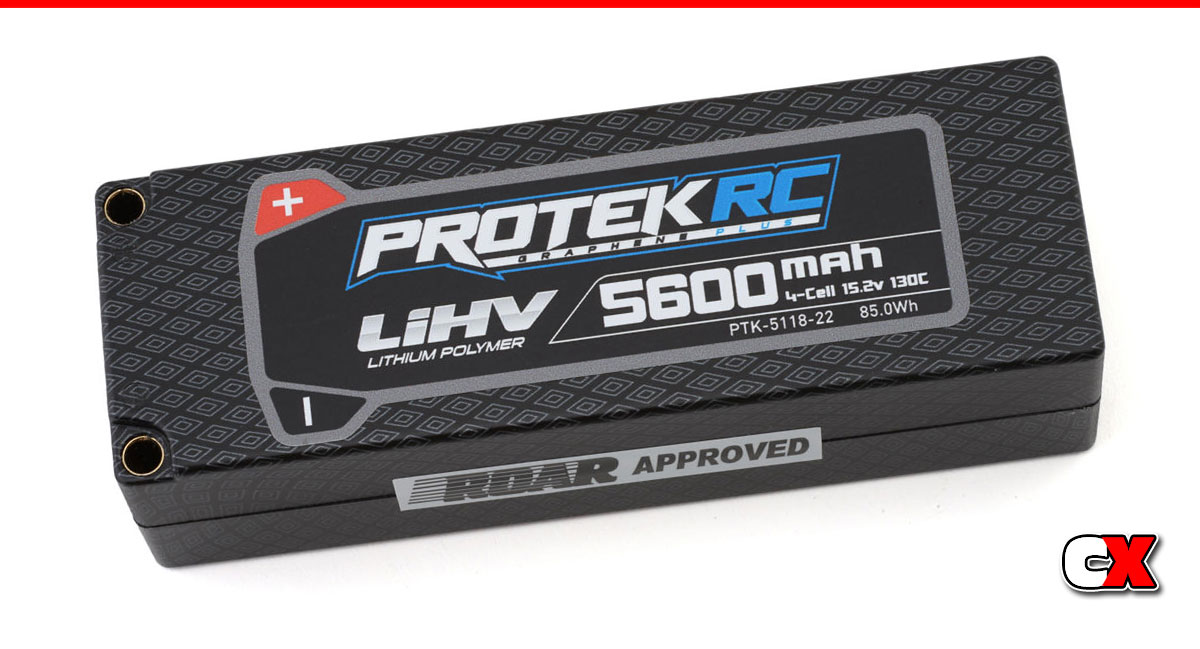 LiHV stands for Lithium High Voltage.
LiHV batteries are closely related to LiPo batteries, but they are designed to tolerate a higher maximum charging voltage.
A typical LiHV cell can be charged to 4.35v per cell, compared with 4.20v per cell for a standard LiPo. That extra voltage can provide additional performance and energy.
For example, a fully charged 2S battery would be:
• 2S LiPo: 8.40v
• 2S LiHV: 8.70v
It doesn’t sound like much, but in competitive RC racing, small differences matter.
Charging LiHV Batteries
LiHV batteries should be charged using your charger’s dedicated LiHV mode. For normal use, we recommend 1C unless the battery manufacturer specifically permits a higher rate.
LiHV batteries should also be balance charged.
The normal maximum is approximately 4.35v per cell, but always check the battery manufacturer’s specifications.
Can You Charge a LiHV Battery on LiPo Mode?
Yes, with an important qualification.
Charging a LiHV battery using standard LiPo mode will normally stop at 4.20v per cell rather than the suggested 4.35v. That means the LiHV battery won’t reach its full capacity or voltage, but you’re not overcharging it.
The opposite situation, however, is dangerous.
Never charge a normal 4.20v LiPo battery using a 4.35v LiHV program.
The charger would attempt to push the standard LiPo beyond its intended maximum voltage.
LiHV Storage Voltage
A typical LiHV storage voltage is approximately 3.85v per cell. Again, use your charger’s LiHV Storage program whenever possible.
LiFe Batteries
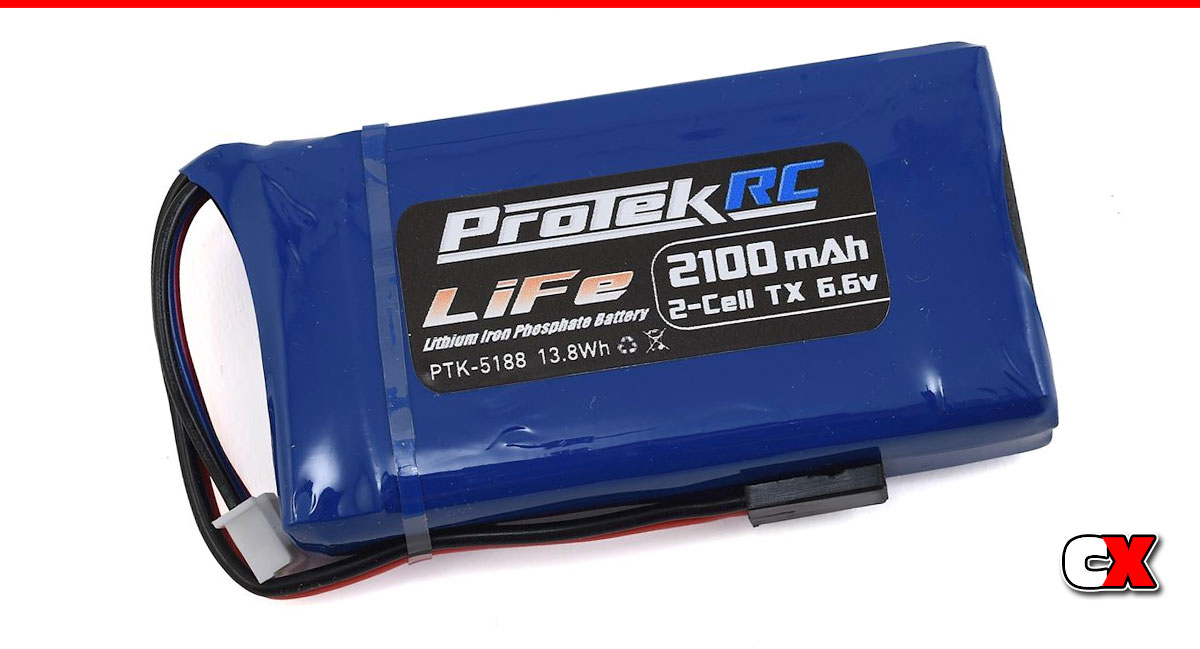 LiFe batteries use Lithium Iron Phosphate chemistry and are sometimes referred to as LiFePO4 batteries. Their voltage is lower than LiPo or LiHV.
A LiFe cell has a nominal voltage of approximately 3.3v per cell with a fully charged voltage of approximately 3.6v per cell.
A 2S LiFe pack is therefore approximately 6.6v nominal and 7.2v fully charged.
LiFe batteries aren’t as common as LiPo batteries for powering high-performance RC cars, but they have several useful applications.
They’re particularly popular as receiver batteries in nitro and gas-powered RC vehicles and in applications where their lower voltage, stability and long cycle life are desirable (like your super-cool computerized radio).
Charging LiFe Batteries
Use the dedicated LiFe setting on your charger. Do not charge a LiFe battery using LiPo mode.
LiPo mode targets 4.20v per cell, while a LiFe cell is normally charged to approximately 3.6v. That’s a significant difference.
Some LiFe cells support relatively high charge rates. Charger documentation may list maximum rates as high as 4C for the chemistry. That doesn’t mean, however, that I recommend you charge every LiFe battery at 4C.
For beginners and everyday RC use, 1C is the conservative choice unless the battery manufacturer specifically recommends something different.
LiFe Storage Voltage
A typical LiFe storage target is approximately 3.3v per cell. Use your charger’s LiFe Storage mode if available and follow the recommendations supplied with your particular pack.
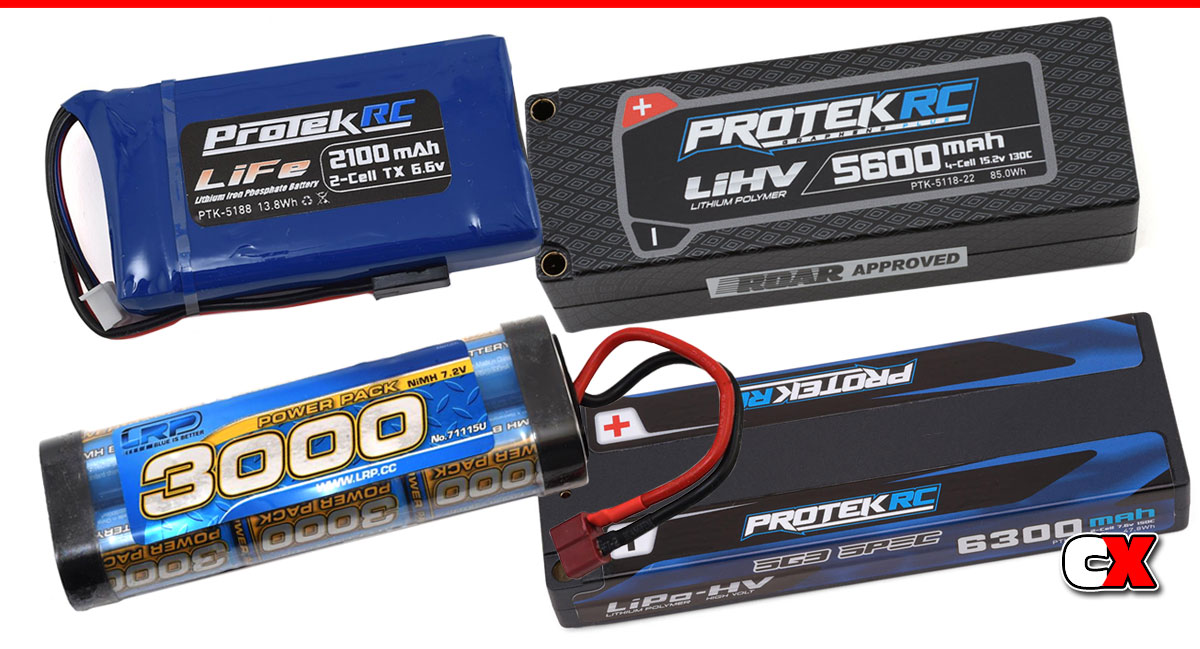
Which RC Battery Type Is Best?
There isn’t one battery chemistry that’s best for every RC vehicle.
NiMH is a good choice when simplicity and ease of use are the priorities. That’s why it remains common in beginner RTR vehicles.
LiPo is the all-around performance choice. It’s widely available, powerful, lightweight and offered in nearly every size and configuration imaginable.
LiHV makes sense when you want the additional voltage and your vehicle, electronics and racing rules allow it.
LiFe is particularly useful for receiver packs and applications where its lower voltage and stable chemistry are advantageous.
Before changing battery chemistry, make sure your vehicle’s ESC and other electronics are compatible with the resulting voltage.
Battery Settings You Should Never Guess
Modern chargers can charge almost everything, which is both convenient and potentially dangerous.
A charger doesn’t necessarily know what you’ve connected to it. If you tell the charger you’ve connected a LiHV battery when you’ve actually connected a standard LiPo, it may attempt to charge that LiPo to 4.35v per cell.
That’s a problem.
Before pressing Start, verify the following:
• Battery chemistry
• Cell count
• Capacity
• Charge current
• Maximum charge voltage
• Balance connection
• Battery condition
Never select a battery chemistry simply because its voltage looks close.
LiPo, LiHV and LiFe require different charging profiles.
The few seconds it takes to check the charger screen are worth it.
How Should RC Batteries Be Stored?
Regardless of chemistry, batteries should be stored somewhere cool and dry, away from direct sunlight and extreme temperatures.
Don’t leave batteries in a hot car, garage shelf exposed to summer heat or direct sunlight.
Lithium batteries deserve additional care. Disconnect them from the vehicle and charger when they’re not being used. Store them so the connectors cannot accidentally contact conductive objects.
A non-conductive, fire-resistant storage container or other appropriate battery-storage solution adds another layer of protection.
Don’t toss loose lithium batteries into a toolbox alongside hex drivers, screws and other metal parts. That’s just asking for an extremely exciting toolbox, and not in a good way.
While I store my packs in a small fireproof storage cabinet, I often use a Bat-Safe Case to transport or for temporary storage.
Inspect Your Batteries Before Charging
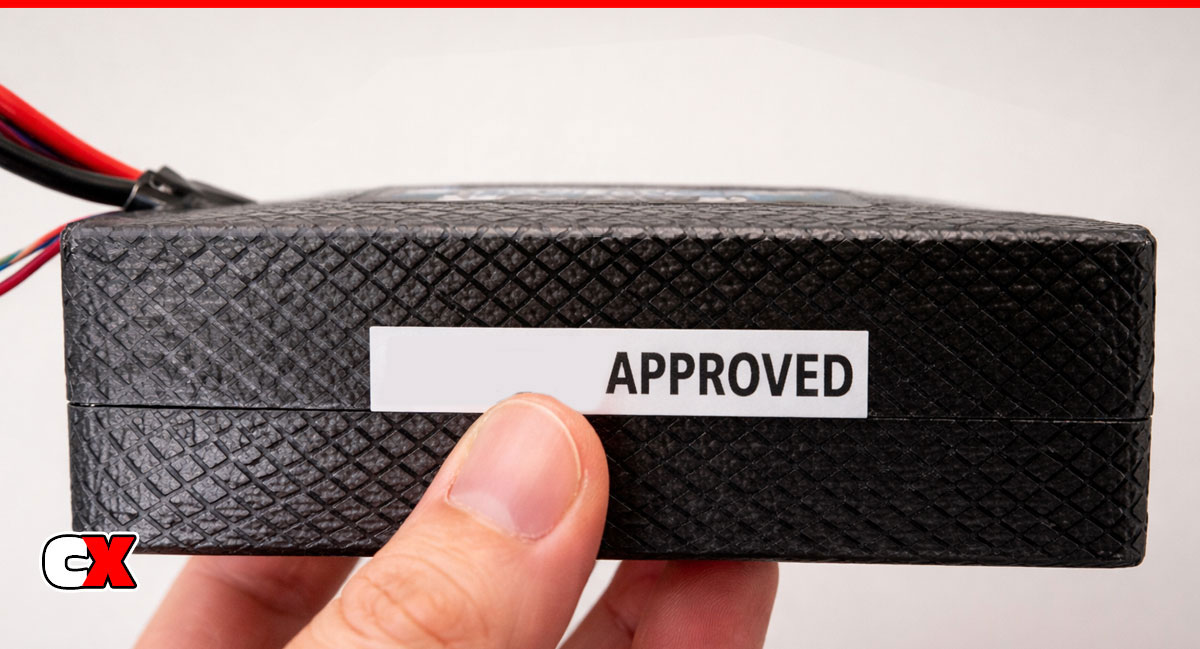 Make battery inspection part of your charging routine.
Look for:
• Swelling or puffing
• Punctures
• Crushed or damaged cases
• Frayed wires
• Damaged connectors
• Damaged balance leads
• Unusual heat
• Corrosion
• Cells that are significantly out of balance
A battery that has been involved in a hard crash deserves extra attention.
If a lithium pack is swollen, physically damaged, unusually hot or otherwise questionable, don’t simply plug it into a charger to “see if it’s okay.” Follow the battery manufacturer’s instructions for handling and disposal of damaged packs.
Don’t Charge Lithium Batteries Unattended
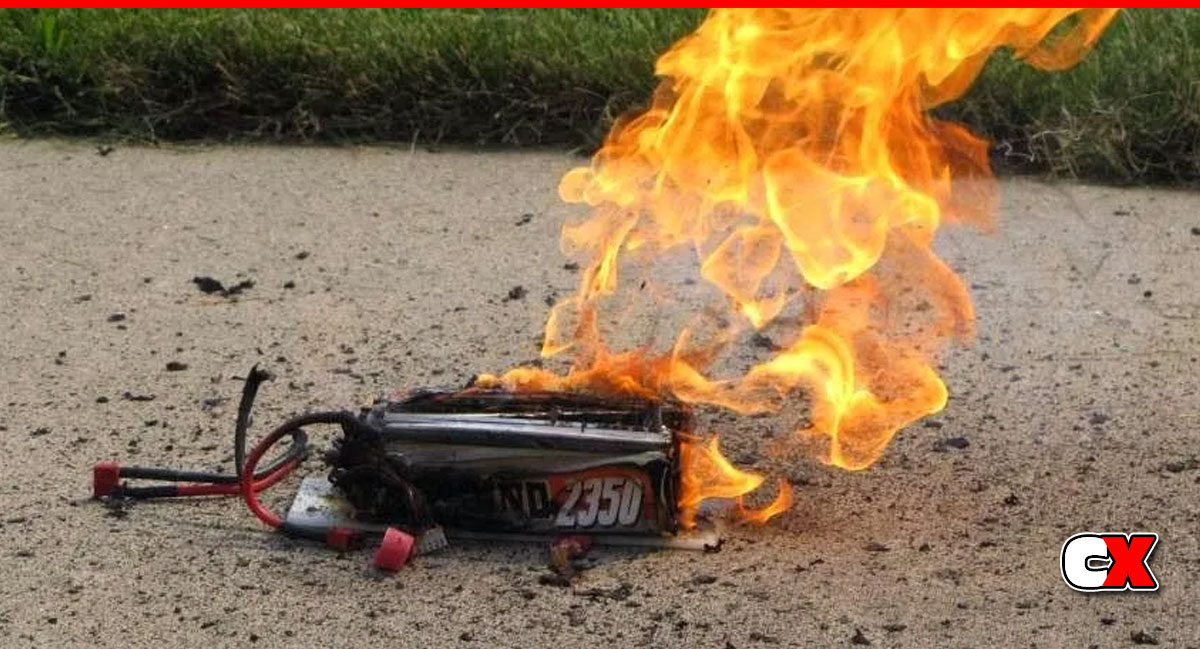 It’s tempting to plug a battery into the charger and go mow the lawn, take a shower or run to the store.
Don’t. Stay nearby while lithium batteries are charging.
Charge them in an appropriate location away from combustible materials and follow the battery and charger manufacturers’ safety instructions.
Battery failures are uncommon when quality equipment is used correctly, but “uncommon” isn’t the same thing as “impossible.” Ask me how I know…
(Also see: RC ESC Cutoff Voltage Explained)
Frequently Asked Questions
Q: What is the safest charge rate for a LiPo battery?
A: For normal RC use, 1C is a conservative starting point unless the battery manufacturer specifies a different rate.
For a 5000mAh battery, 1C equals 5 amps. For a 4000mAh battery, 1C equals 4 amps.
Q: What is the maximum charge rate for a LiPo battery?
A: There is no universal maximum charge rate that applies to every LiPo battery. Some manufacturers rate particular batteries for 2C, 3C, 5C or other charge rates. Other batteries may specify 1C.
Use the maximum charge rate specified by the battery manufacturer.
Don’t assume that because one 5000mAh LiPo can handle 2C, another 5000mAh pack can too.
Q: Can I charge my LiPo at 40 amps?
A: Some competitive RC racers use very high charge currents with batteries designed for racing.
For a 5000mAh battery, however, 40 amps represents an 8C charge rate.
That’s far beyond the conservative 1C recommendation in this guide and should not be treated as a normal charging practice.
High-current charging can increase heat and battery stress and should only be considered by experienced users with batteries, chargers, power supplies, connectors and charging equipment specifically suited to the task.
For typical RC hobby use, CompetitionX does not recommend it.
Q: Do I need to storage charge my LiPo every night?
A: Not necessarily. If you’re running again shortly, there’s little reason to obsess over getting the battery to exactly 3.80v per cell every evening.
If the battery will sit unused for an extended period, however, putting it into Storage Mode is good practice. Avoid leaving lithium batteries fully charged for long periods.
Q: Can I leave my LiPo fully charged for a week?
A: It’s better to return the battery to storage voltage if you know it won’t be used. Keeping lithium batteries fully charged for extended periods can accelerate aging and reduce their useful lifespan.
Q: Can I charge a LiHV battery with a LiPo charger?
A: Only if the charger supports the appropriate mode.
Charging a LiHV battery using standard LiPo mode will normally stop at 4.20v per cell, meaning the battery won’t receive a complete LiHV charge.
To charge it fully to its designed maximum, use a charger with a proper LiHV program.
Q: Can I charge a normal LiPo using LiHV mode?
A: Absolutely not. A standard LiPo is normally limited to 4.20v per cell, while LiHV charging can reach approximately 4.35v per cell.
Never intentionally overcharge a standard LiPo.
Q: Do NiMH batteries need to be balance charged?
A: No. A conventional NiMH battery doesn’t use the balance connector found on multi-cell lithium packs. Smart NiMH chargers typically use delta-peak detection to determine when charging is complete.
Q: Do NiMH batteries need a storage charge?
A: Not in the same way lithium batteries do.
There is no standard NiMH storage voltage equivalent to the 3.8v-per-cell target commonly used for LiPo batteries. Keep NiMH packs in a cool, dry location and periodically check packs that remain unused for long periods.
Q: Which battery lasts the longest?
A: That depends heavily on battery quality, usage, charging practices, discharge depth, temperature and storage habits.
Battery chemistry alone doesn’t determine lifespan. A high-quality battery that’s treated properly can outlast a battery that’s repeatedly overheated, over-discharged, stored fully charged or charged beyond its recommended limits.
Q: Is LiFe safer than LiPo?
A: LiFePO4 chemistry is generally considered more thermally stable than conventional LiPo chemistry, which is one reason it’s attractive for certain applications.
That doesn’t, however, make a LiFe battery indestructible.
It still requires the correct charger setting, appropriate handling and protection from shorts, physical damage and incorrect charging.

